Surfing in Morocco: Best Spots for Beginners & Pros
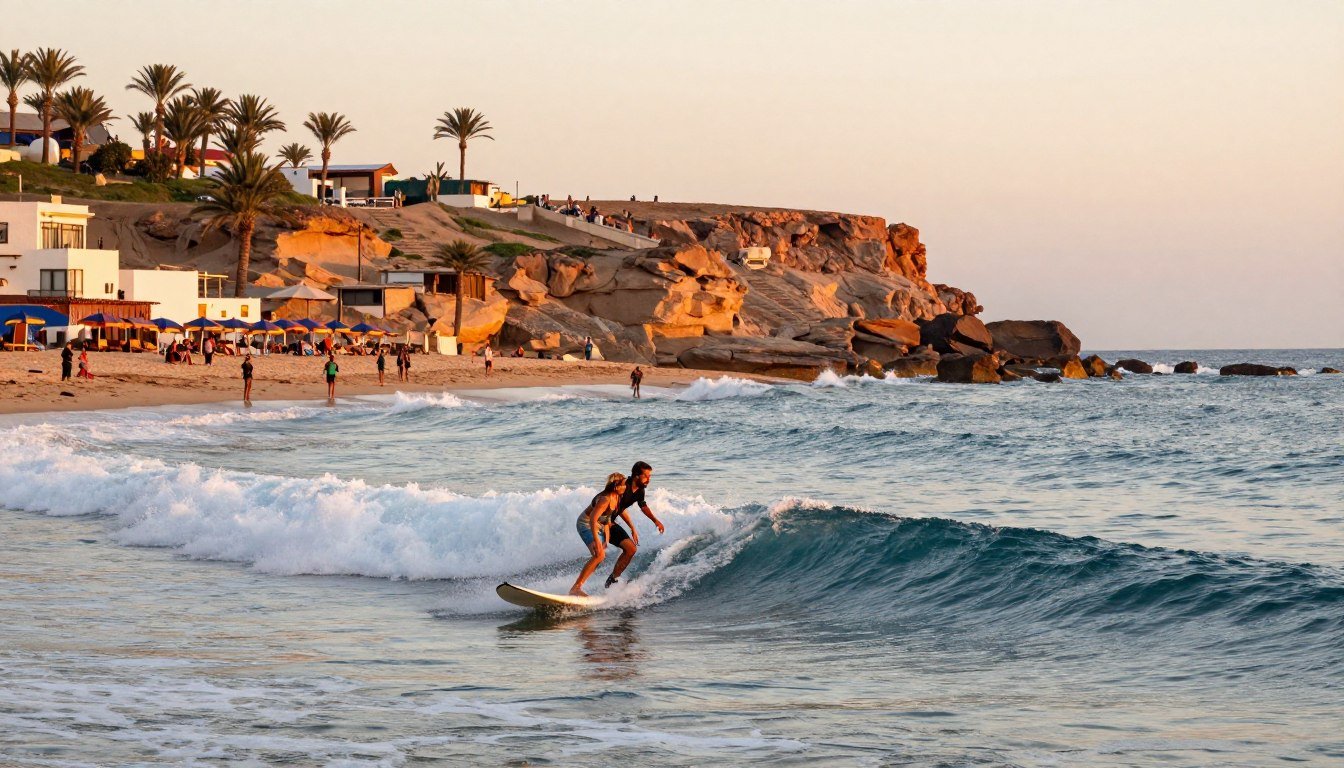
Thinking back on my surfing trips, Morocco is a standout. Its Atlantic coast has consistent waves and warm water. This makes it perfect for surfers at any level.
From Taghazout’s gentle waves to Imsouane’s strong breaks, Morocco’s surf scene has it all. No matter if you’re new to surfing or have years of experience, Morocco’s spots will amaze you.
Key Takeaways
- Discover the best surfing spots in Morocco for beginners and pros.
- Explore the top locations along Morocco’s Atlantic coast.
- Get tips on how to make the most of your surfing adventure.
- Learn about the consistent waves and warm water that make Morocco ideal.
- Find out why Morocco is a surfer’s paradise.
Why Morocco Is a Surfer’s Paradise
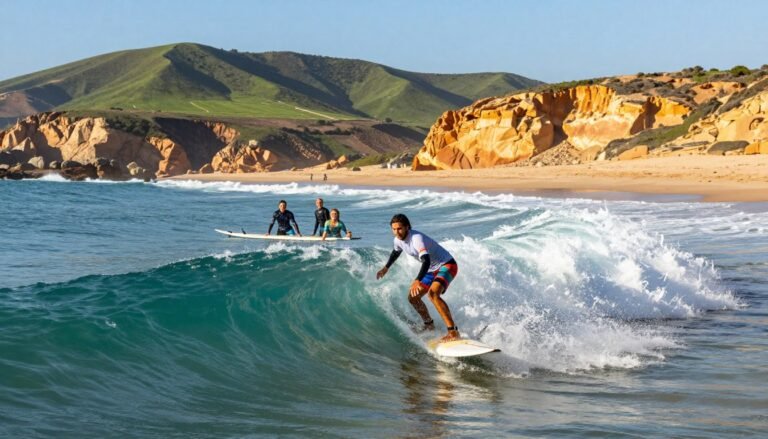
Morocco‘s coastline is a dream for surfers, with waves for every skill level. Taghazout’s region is famous for its perfect waves, attracting many surfers.
The Atlantic Coast’s Perfect Waves
The Atlantic coast of Morocco has waves for all. The swells are consistent, and the water is warm. This makes it perfect for surfers.
Some top spots include:
- Taghazout Bay, known for its stunning views and waves.
- Essaouira Beach, with gentle waves and wide beaches for beginners.
- Imsouane Bay, famous for its long rides and tough waves for pros.
The area’s mix of sandy beaches and rocky points offers a variety of breaks. This caters to all levels of experience.
Year-Round Surfing Opportunities
Surfing in Morocco is great all year round. The Atlantic coast has consistent swells, offering something for everyone. Beginners and experienced surfers will find their match.
The warm water and pleasant climate draw surfers year-round. Morocco’s surf culture and friendly communities make it a top spot for surfers.
When Is the Best Time for Surfing in Morocco?
Knowing when to surf in Morocco is crucial for a great adventure. The country’s Atlantic coast has different surfing conditions all year. This makes it a favorite spot for surfers at every level.
The surfing in Morocco changes a lot between the peak season and summer. Here’s a quick guide to help you plan your trip.
Peak Season: October to March
From October to March, the waves are big, perfect for experienced surfers. The Atlantic swells are strongest then, offering consistent, powerful waves. Top spots include:
- Anchor Point
- Killer Point
- Boilers
These spots are tough, but for a thrilling ride, the peak season is the best time to visit Morocco.
Summer Surfing: April to September
April to September brings smaller waves and warmer water, great for beginners or those wanting to chill. The surf is milder, with fewer people around. Ideal spots include:
- Taghazout Bay
- Essaouira Beach
- Imsouane Bay
These places are perfect for learning or improving your skills in a calm setting.
Seasonal Wave Patterns and Swell Directions
Morocco’s coast faces the Atlantic, so wave patterns and directions change with the seasons. Knowing these can enhance your surfing trip. Key points to remember are:
- Swell Direction: Swells come from different directions at different times, affecting wave quality.
- Wave Size: Wave sizes are much bigger during the peak season than in summer.
Understanding these can help you plan your surfing trip better and enjoy Morocco more.
Essential Gear for Your Moroccan Surf Adventure
Getting ready for my Moroccan surf trip, I know the right gear is key. Morocco’s waves change with the seasons. So, packing smart is a must.
Wetsuit Requirements by Season
The water in Morocco changes with the seasons. From October to March, it’s cooler, needing a3/2 mm wetsuit. Summer months are warmer, so a shorty or lightweight wetsuit is better. Knowing this helps pick the right clothes for surfing.
Board Selection for Moroccan Waves
Morocco’s waves are strong, especially in peak season. Afunboard or a shortboard works best. Beginners might want a soft-top surfboard for safety. The right board also depends on the surf spot, like Imsouane Bay.
Additional Equipment to Pack
There’s more than just a wetsuit and surfboard for a good surf trip. You’ll needsurf wax for grip, aleash to keep your board, and aRash guard for sun and skin protection.
| Equipment | Peak Season (Oct-Mar) | Summer Season (Apr-Sep) |
|---|---|---|
| Wetsuit | 3/2 mm | Shorty or lightweight |
| Surfboard | Funboard/Shortboard | Soft-top for beginners |
| Additional Gear | Surf wax, Leash, Rash guard | Surf wax, Leash, Rash guard |
Choosing the right gear makes your Moroccan surf trip better. It ensures a fun and memorable adventure.
Surfing in Morocco: A Step-by-Step Guide for First-Timers
Starting your surfing journey in Morocco can be thrilling and a bit scary. But, with the right help, you’ll be catching waves in no time. Morocco is great for beginners, with lots of surf schools and camps just for you.
Planning Your Trip
Before you go to Morocco, think about a few things to make your trip smooth and fun. First, pick the best time to visit based on the waves and weather you like. Morocco’s surf season is from October to March, but summer can be good too.
- Look for surf schools and camps for beginners.
- Book a place to stay near the surf spots you want to visit.
- Check the weather forecast before you go.
Arriving and Getting Oriented
When you arrive, take some time to get to know your area. Beginners often start in places like Taghazout or Essaouira. These towns have lots of things for surfers, like shops and places to eat.
Getting to your accommodation might be by taxi or shuttle from the airport. Make sure to book this ahead of time to avoid any problems.
Finding Your First Waves
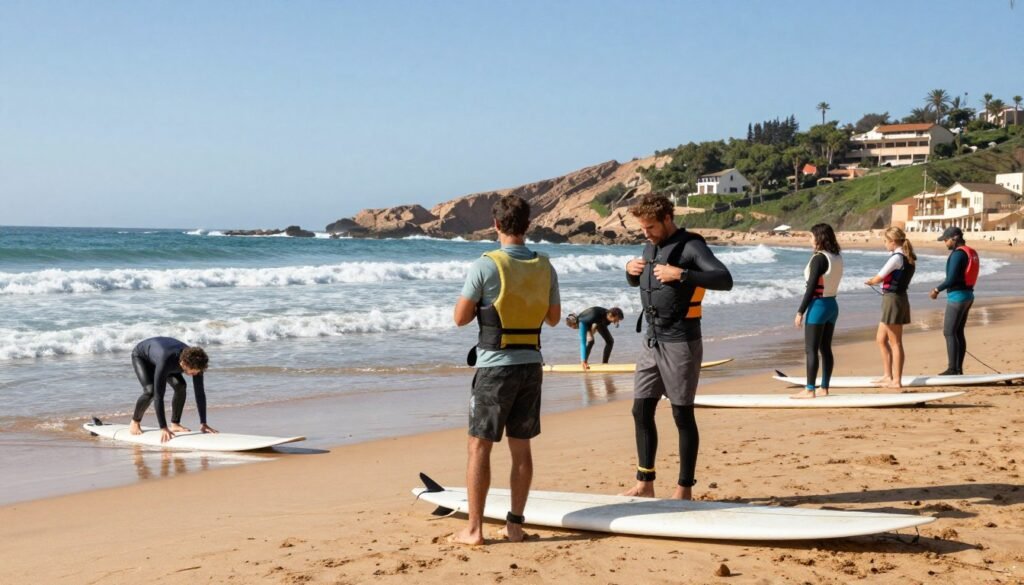
Once you’re settled, it’s time to find some waves. Start with easy waves and then try harder ones as you get better. Many surf schools offer lessons for beginners, which is a great way to learn and get better.
- Start with soft-top surfboards and a leash.
- Practice getting up and balancing.
- Take lessons from certified instructors.
By following these steps, you’ll be ready to enjoy Morocco’s beautiful surf spots. Whether you’re trying to catch your first wave or get better, Morocco is perfect for all levels of surfers.
Top Surfing Spots in Morocco for Beginners
Morocco is great for starting your surfing journey. Its waves are consistent and the waters are warm. The coastline has many spots perfect for beginners, with gentle waves and a calm vibe.
Taghazout Bay: Panorama Point and Hash Point
Taghazout Bay is a hit with beginner surfers. Panorama Point and Hash Point are great for learning. The bay’s waves are consistent and the waters are warm, making it perfect for catching your first waves.
The surf schools here offer lessons and rentals for beginners. They help you get started with surfing.
Essaouira Beach: Gentle Waves and Wide Beaches
Essaouira Beach is great for beginners. It has gentle waves and wide, sandy beaches. The beach is safe from strong winds, making it welcoming for new surfers.
Surf schools nearby offer expert lessons. They help beginners improve their skills quickly.
Imsouane Bay: The Longest Ride in Morocco
Imsouane Bay is famous for its longest rides in Morocco. It’s exciting for beginners to try their skills here. The waves are generally gentle, letting learners ride them for longer.
The local surf community is friendly. There are many surf schools and rental places around.
In conclusion, Morocco’s surf spots like Taghazout Bay, Essaouira Beach, and Imsouane Bay are perfect for beginners. They have consistent waves, warm waters, and a relaxed vibe. Whether you want gentle waves or a long ride, Morocco has something for every beginner surfer.
Premier Surf Breaks for Experienced Riders
Morocco is a paradise for seasoned surfers, with a variety of challenging waves. Its coastline boasts world-class surf spots perfect for those seeking adventure. These spots offer thrilling experiences for experienced riders.
Anchor Point: Morocco’s Perfect Right-Hand Point Break
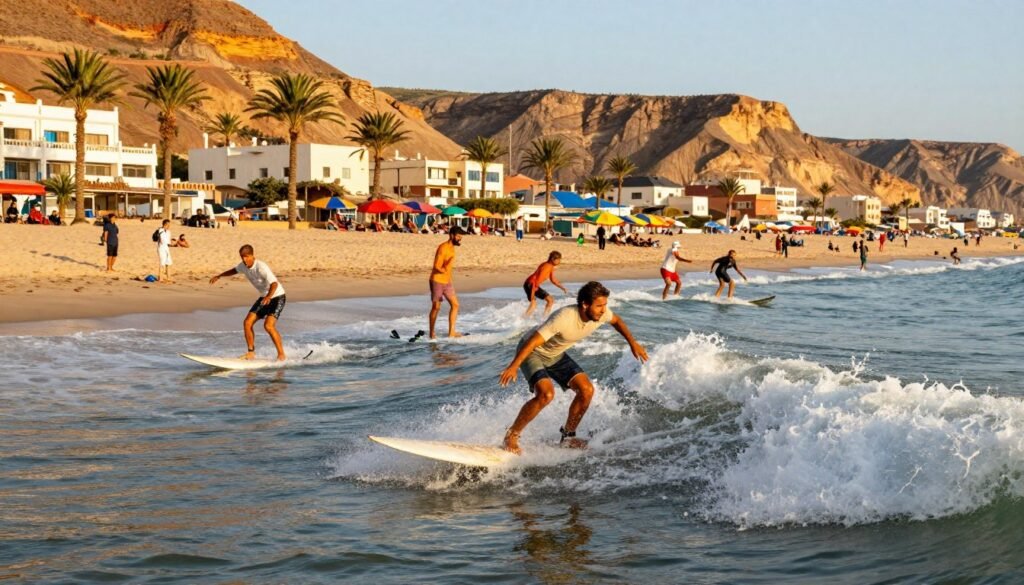
Anchor Point is famous for its ideal right-hand point break. It’s a top choice for experienced surfers. The waves are consistent, and the scenery is breathtaking, making it a memorable ride.
Surfers can enjoy long rides and try out challenging maneuvers. It’s perfect for those who want to test their skills.
Killer Point: Challenging Waves for Advanced Surfers
Killer Point is for surfers who dare to take on tough waves. It’s a spot for advanced surfers seeking an adrenaline rush. The waves are powerful, and the coastline is rugged, requiring respect.
But the reward is a ride that’s both thrilling and exhilarating.
Boilers and La Source: Reef Break Adventures
Boilers and La Source offer exciting reef break adventures. These spots have challenging waves and beautiful scenery. They’re great for any Moroccan surf trip.
Surfers need to be ready for strong waves and sharp reefs. But the experience is worth the challenge.
| Surf Spot | Wave Type | Difficulty Level |
|---|---|---|
| Anchor Point | Right-hand point break | Advanced |
| Killer Point | Powerful waves | Expert |
| Boilers and La Source | Reef break | Advanced |
In conclusion, Morocco’s top surf breaks are a goldmine for experienced surfers. Whether you’re at Anchor Point, Killer Point, or Boilers and La Source, Morocco caters to all levels of experienced surfers.
My Favorite Surf Camps and Schools
I’ve explored Morocco’s top surf camps and schools as a seasoned surfer. I’m excited to share my favorites with you. Morocco is famous for its world-class surfing, thanks to these camps and schools.
Taghazout Area Options
The Taghazout area is a hotspot for surfers. It has many excellent surf camps and schools. Supertubes Surf School and Taghazout Surf School are top choices. They offer lessons for all levels, with experienced instructors.
Essaouira and Agadir Offerings
Essaouira and Agadir also have great surf camps and schools. Essaouira Surf School stands out in Essaouira, offering lessons and guided surf sessions. In Agadir, Agadir Surf School provides a wide range of services, including equipment rental and coaching. They cater to all skill levels.
What to Look for in a Quality Surf School
When picking a surf school or camp in Morocco, consider a few things. Look for schools with certified, experienced instructors and a good safety record. Choose schools known for personalized coaching and have a strong reputation among surfers. Also, check if they offer equipment rental and accommodation options for a complete experience.
Staying Safe While Surfing Morocco’s Coastline
Exploring Morocco’s coastline means keeping safety first while surfing. Morocco’s surf spots are mostly safe, but it’s good to know about hazards and precautions. This ensures a fun and safe surfing experience.
Understanding Local Hazards
Rip currents are a big hazard in Morocco. These strong water channels can pull you away from the shore. Knowing how to spot and escape them is key. Also, watch out for sharp rocks or reefs that can hurt you if you’re not careful.
Before you surf, check the local surf forecasts and warnings. Surf schools and rental shops often give briefings on the current conditions. This advice is helpful for both new and experienced surfers.
Health Precautions and Medical Access
It’s important to take health precautions seriously while surfing in Morocco. The sun can be strong, so use sunscreen, a hat, and sunglasses. Also, drink lots of water before, during, and after surfing to avoid dehydration.
In case of an emergency, knowing where to find medical help is crucial. Places like Taghazout and Essaouira have clinics and hospitals. It’s also wise to have travel insurance that covers medical emergencies.
Navigating Remote Surf Spots Safely
Some of Morocco’s best surf spots are in remote areas. These can be hard to get to. It’s best to go with a group or guide who knows the area. Also, carry a first-aid kit, a fully charged phone, and a portable charger for emergencies.
| Safety Tip | Description |
|---|---|
| Check Local Forecasts | Always check the surf forecast and warnings before heading out. |
| Know Rip Currents | Understand how to identify and escape rip currents. |
| Protect Yourself | Use sunscreen, a hat, and sunglasses to protect against the sun. |
| Stay Hydrated | Drink plenty of water before, during, and after surfing. |
By knowing about local hazards, taking health precautions, and safely navigating remote spots, you can have a great time surfing in Morocco.
Practical Tips for Your Moroccan Surf Adventure
Planning a surf trip to Morocco needs careful thought. You must consider many factors for a great trip. From picking the right place to stay to knowing how to get around, being ready is important.
Accommodation Options Near Prime Surf Spots
Morocco has many places to stay near the best surf spots. You can find options for every budget and taste. It’s wise to book early, especially when it’s busy.
Places like Taghazout and Essaouira have lots of places to stay close to the beach. Pick a spot that’s easy to get to your favorite surf spots.
Transportation Between Breaks
There are several ways to get around Morocco’s coast. Renting a car lets you explore at your own speed. Taxis and shuttles from surf camps are also good choices.
If you don’t want to drive, many surf camps offer rides to surf spots. Look into your options early to plan well.
Budgeting and Currency Tips
Keeping your spending in check is key for a worry-free trip. The local money is the Moroccan dirham, but you can also use euros and dollars. Plan for costs like where you’ll stay, eat, and surf lessons.
| Expense | Average Cost |
|---|---|
| Surf Lesson | 200-300 MAD |
| Meal at Local Café | 30-50 MAD |
| Accommodation per Night | 200-500 MAD |
By planning well and keeping an eye on your spending, you’ll have a great time surfing in Morocco. Have fun!
Conclusion: Making the Most of Your Moroccan Surf Trip
Morocco is a top spot for surfers of all levels. It has consistent waves, warm water, and a friendly culture. This makes it perfect for a surf trip.
Knowing when to go, where to surf, and how to stay safe is key. Morocco has waves for everyone, from beginners to pros. You can find gentle waves in Essaouira or try the tough breaks at Killer Point.
To have the best trip, plan well, pick the right gear, and keep up with local weather. Surfing in Morocco is an amazing experience. It’s not just about the waves; it’s about diving into a rich culture and beautiful landscapes.
FAQ
What is the best time to visit Morocco for surfing?
The best time for surfing in Morocco is from October to March. This is when the waves are big and steady, perfect for those who are experienced. Beginners will find the summer months, from April to September, better. The water is warmer, and the waves are smaller.
Is Morocco suitable for beginner surfers?
Yes, Morocco is great for beginners. It has many surf schools and camps designed for newbies. Places like Taghazout Bay, Essaouira Beach, and Imsouane Bay are perfect for learning.
What are the top surf spots in Morocco for experienced surfers?
Experienced surfers will love Morocco’s top spots. Anchor Point has a perfect right-hand point break. Killer Point offers tough waves. Boilers and La Source are known for their exciting reef breaks.
Do I need a wetsuit to surf in Morocco?
Morocco’s warm waters often mean you don’t need a wetsuit. But, it’s important to pick the right gear for the weather. The water temperature changes, so always check before you go.
How do I choose the right surf camp or school in Morocco?
Look at the location, instructor qualifications, and what’s included when choosing a surf camp or school. Taghazout is known for great options. Essaouira and Agadir also have top-notch places.
What safety precautions should I take when surfing in Morocco?
Be aware of local dangers like rip currents and sharp rocks. Also, take health precautions and know how to get medical help if needed.
How do I get to the surf spots in Morocco?
Morocco has many ways to get around, like renting a car or using public transport. Knowing your options and budgeting will make your trip better.
Can I surf in Morocco year-round?
Yes, you can surf in Morocco all year. Each season has different waves. The warm water and steady swells mean there’s always something for every surfer.