Morocco Visa & Entry Requirements (e-Visa Explained)
Are you planning a trip to Morocco and wondering what entry requirements you need to fulfill?
Visa rules can be confusing. But knowing the process is key for a smooth entry.
The e-Visa system makes things easier. Now, you can get your visa online. It doesn’t matter if you’re a tourist, business traveler, or student. Knowing the morocco visa requirements is a must.
This article will help you understand the different visas and how to apply. You’ll be ready for your trip.
Key Takeaways
- Understanding the different types of visas available for Morocco
- Simplified e-Visa application process
- Required documents for a successful application
- Tips for a smooth entry into Morocco
- Importance of meeting morocco entry requirements
Understanding Morocco’s Visa Policy
Travelers planning a trip to Morocco need to know about visa requirements. Morocco’s visa policy helps with tourism and business while keeping the country safe.
Countries Eligible for Visa-Free Entry
Some countries don’t need a visa to visit Morocco. This makes it easier for people to travel and build international ties.
List of Exempt Nations
People from the U.S., Canada, and some European countries can visit Morocco without a visa. The list of exempt nations includes:
- United States
- Canada
- European Union countries
- Australia
- Japan
Duration of Stay for Visa-Free Visitors
How long you can stay in Morocco without a visa depends on where you’re from. For example, U.S. citizens can stay up to 90 days in 180 days.
| Nationality | Duration of Stay |
|---|---|
| U.S. Citizens | Up to 90 days |
| EU Citizens | Up to 90 days |
Nations That Require a Visa
If you’re from a country that needs a visa, you must apply before visiting Morocco. The visa type depends on why you’re visiting, like tourism or business.
Recent Changes to Morocco’s Visa System
Morocco has made big changes to its visa system. These include a new e-Visa platform and updates after COVID-19.
Introduction of the e-Visa Platform
The e-Visa platform makes applying for visas easier. It’s a big step towards making travel to Morocco better, says the Moroccan Ministry of Foreign Affairs.
“The e-Visa system is a significant step towards modernizing our immigration processes and improving the travel experience for visitors.”
Moroccan Ministry of Foreign Affairs
Post-COVID Policy Updates
Morocco has updated its visa policies due to COVID-19. These changes help keep everyone safe while making travel easier.
Do I Need a Visa for Morocco?
Before you plan your trip to Morocco, it’s key to know the visa rules for your country. Morocco’s visa policy helps with tourism and business travel. It also keeps the country safe.
Visa Requirements for US Citizens
US citizens can visit Morocco without a visa for up to 90 days for tourism or business. But, your passport must be good for at least six months after your stay.
Tourist Travel Rules
US tourists don’t need a visa but must have a valid passport and proof of travel plans. Travel insurance that covers Morocco is also a good idea.
Business Travel Considerations
For business trips, a visa is needed if you stay over 90 days or do non-tourism activities. Check with the Moroccan embassy or consulate for details.
Requirements for UK Travelers
UK citizens can enter Morocco without a visa for up to 90 days for tourism or business. Make sure your passport is valid for at least six months after you leave.
EU Citizens Entry Rules
EU citizens can travel to Morocco without a visa for tourism or business for 90 days in 180 days. Look up the entry rules for your EU country.
Requirements for Other Nationalities
Visa rules for other countries differ. It’s important to check the visa needs for your country.
Commonwealth Countries
Some Commonwealth countries have special deals with Morocco for visas. Get the latest info from the Moroccan embassy or consulate.
Middle Eastern Nations
Citizens from the Middle East have different visa rules. Some need a visa, while others might get a visa-free entry or visa on arrival.
Asian Countries
Asian nationals face varying visa requirements. Some get visa-free entry, while others must apply for a visa in advance.
Types of Morocco Visas Available
Morocco has different visas for various travelers. This includes tourists and business professionals. Knowing the types of visas is key for a smooth entry.
Tourist Visas
Tourist visas are the most common in Morocco. They let people enter for tourism. This includes exploring the culture or enjoying the landscapes.
Single vs. Multiple Entry Options
There are single-entry and multiple-entry tourist visas. A single-entry visa lets you in once. A multiple-entry visa is for those who visit multiple times or other countries.
Business Visas
Business travelers need a business visa. It’s for those attending meetings or negotiating contracts.
Student Visas
Students going to Moroccan schools need a student visa. It lets them study there for their program’s length.
Work Permits
Foreigners wanting to work in Morocco need a work permit. This is sponsored by the employer and requires more documents.
Can You Work on a Tourist Visa?
Working on a tourist visa is usually not allowed. If you plan to work, even briefly, you must get the right visa or permit.
| Visa Type | Purpose | Entry Options |
|---|---|---|
| Tourist Visa | Tourism, visiting family and friends | Single or Multiple |
| Business Visa | Business meetings, conferences | Single or Multiple |
| Student Visa | Studying in Morocco | Single |
| Work Permit | Employment in Morocco | Single or Multiple |
Introduction to Morocco’s e-Visa System
Morocco’s e-Visa is changing how people plan trips to this stunning country. The Moroccan government has made an electronic visa system. It makes applying for a visa easier for travelers from around the world.
What is the Morocco e-Visa?
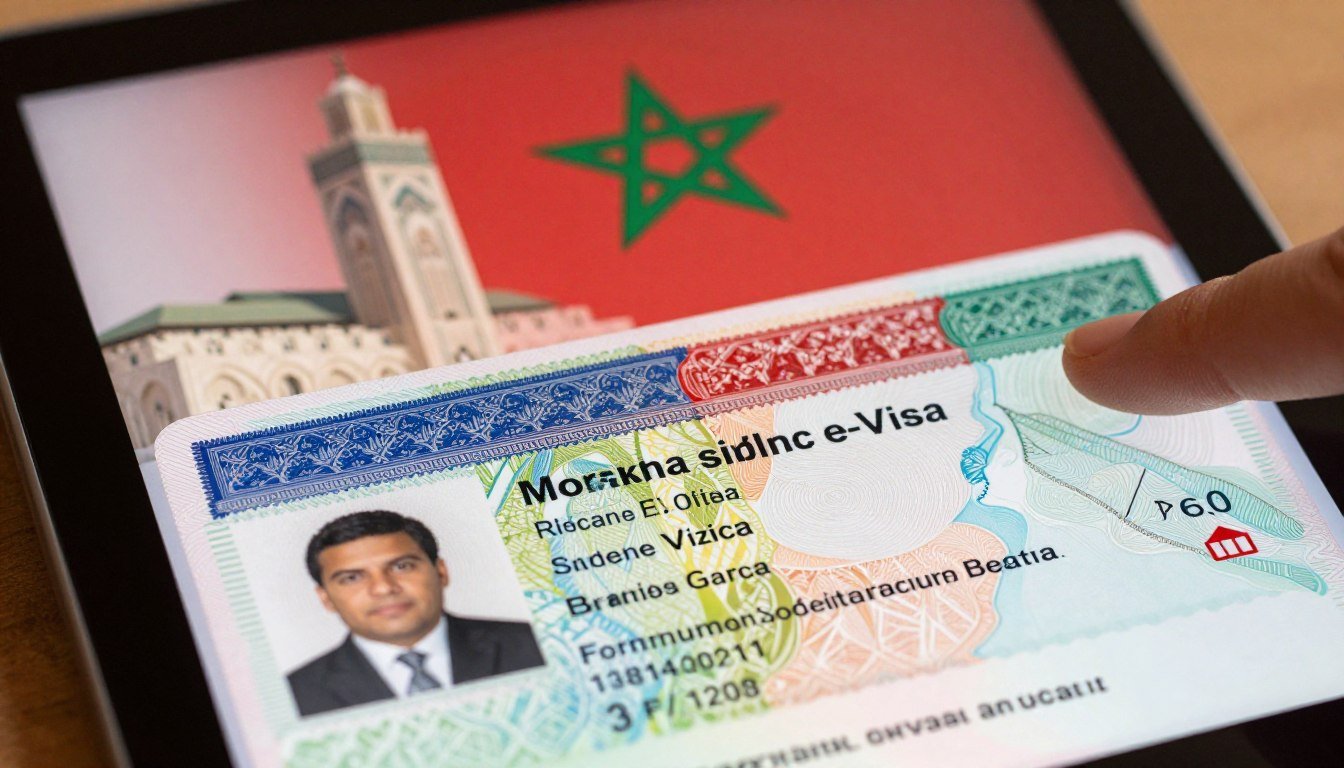
The Morocco e-Visa lets travelers visit Morocco for tourism, business, or just passing through. It’s a digital way to get a visa instead of the old paper process.
Is the Morocco e-Visa Legitimate?
Yes, the Morocco e-Visa is real and recognized by the government. They created it to make getting a visa easier.
Benefits of the Electronic Visa
The electronic visa has many advantages, including:
- Convenience: Apply from anywhere with internet.
- Time-saving: It’s faster than the old ways.
- Ease of use: The application is simple online.
e-Visa vs. Traditional Visa Application
The e-Visa is more efficient and easier than the old visa process. You don’t have to go to an embassy or consulate.
e-Visa Eligibility Criteria
To get a Morocco e-Visa, you must meet certain requirements.
Nationalities Eligible for e-Visa
Many countries can get a Morocco e-Visa. Check the official government website for the latest list of countries.
Purpose of Visit Restrictions
The e-Visa is for specific reasons like tourism or business. Make sure your reason matches the visa type you’re applying for.

Morocco Visa Requirements: Documents Checklist
Planning a trip to Morocco? You need to know about visa requirements and the documents needed. Having all the right documents makes the visa application smoother and avoids delays.
Passport Requirements
Your passport is key for traveling to Morocco. It must meet certain criteria to be valid for entry.
Validity Period Needed
Your passport should be valid for at least six months after your stay in Morocco. This ensures your passport is valid for your stay and any possible extensions.
Blank Pages Required
You’ll need at least two blank pages in your passport for visa stamps. This is true for both visa-free entry and visa applications.
Photo Specifications
The photo for your Morocco visa must be recent, in color, and on a white background. It’s important to follow the size and quality guidelines to avoid rejection.
Proof of Accommodation
You’ll need to show where you’ll stay in Morocco. This can be hotel reservations or a letter from your host.
Hotel Reservations
For hotel stays, you’ll need a confirmed reservation. You can book this online or through a booking platform.
Host Letters
Staying with friends or family? You’ll need a letter from your host. It should include their address and contact information. This letter proves your accommodation.
Financial Requirements
You must show you have enough money for your stay in Morocco. Bank statements are usually used for this.
Bank Statements
Your bank statements should show a stable financial situation. They should also have enough money to cover your expenses during your stay.
Minimum Funds Required
There’s no fixed amount needed, but having at least $1,000 per month is recommended. The exact amount depends on your travel plans and where you’ll stay.
Travel Insurance
Travel insurance that covers Morocco is highly recommended. It protects you from unexpected medical or travel-related expenses.
Coverage Requirements
Your insurance should cover at least $30,000 in medical expenses, including emergency evacuations. Make sure your policy is valid in Morocco and covers your entire stay.
By preparing these documents carefully, you’ll be ready for a successful Morocco visa application. Always check the specific requirements based on your nationality and visa type.
Step-by-Step Guide to Apply for Morocco e-Visa
Getting a Morocco e-Visa is easy and can be done online in a few steps. The process is designed to be simple and quick. This way, travelers can get their visa fast.
Creating an Account on the Official Platform
To apply for a Morocco e-Visa, start by creating an account on the official site. This is a simple step.
Registration Process
You’ll need to give basic info like your name and email during registration. Make sure your info is correct and valid.
Account Verification
After registering, verify your account. You’ll get a link in your email to do this. Check your spam folder if you can’t find the email.
Completing the Application Form
After verifying your account, fill out the Morocco e-Visa application form. You’ll need to provide various details.
Personal Information Section
In this section, give your personal details like your full name, date of birth, and nationality. Make sure this info matches your passport.
Travel Details Section
Here, provide your travel plans. This includes your entry date into Morocco and where you’ll stay.
Purpose of Visit Information
Specify why you’re visiting Morocco. It could be for tourism, business, or another reason.
Uploading Required Documents
You’ll need to upload certain documents as part of the application.
File Format Requirements
Your documents should be in PDF or JPEG format. Check the official website for the latest on accepted file types.
Size Limitations
Be mindful of file size limits to avoid upload issues. Files should be under a few megabytes.
Paying the Application Fee
After filling out your application and uploading documents, pay the fee.
Available Payment Methods
The official platform accepts various payment methods, including cards. See the official website for a list of accepted payment methods.
Tracking Your Application
After submitting your application and paying the fee, track your Morocco e-Visa status.
Understanding Status Updates
Status updates will tell you if your application is being processed, approved, or if more info is needed. Keep an eye on your email for updates from the Moroccan immigration authorities.
| Application Stage | Description | Typical Timeframe |
|---|---|---|
| Registration and Application | Creating an account and filling out the application form | 30 minutes |
| Document Upload | Uploading required documents | 15 minutes |
| Payment Processing | Paying the application fee | 10 minutes |
| Application Review | Waiting for the application to be reviewed | 3-5 working days |
“The Morocco e-Visa system has made it significantly easier for travelers to obtain the necessary visa for their trip, streamlining the process and reducing wait times.”
Moroccan Immigration Authority
By following these steps, you can successfully apply for your Morocco e-Visa. Then, you can enjoy all that Morocco has to offer.
Morocco e-Visa Processing Time and Fees
Knowing the processing time and fees for your Morocco e-Visa is key for a smooth trip. The time it takes can change based on the visa type and your chosen processing option.
Standard Processing Timeframes
The standard time for a Morocco e-Visa is 3 to 5 working days. But, this can change based on how many applications there are and how accurate your info is.
How Long Does Morocco e-Visa Take?
Usually, getting a Morocco e-Visa takes about 3 working days. It’s smart to apply early to avoid any delays.
Expedited Processing Options
If you need your e-Visa fast, Morocco has expedited options. These can make your wait time much shorter, often under 24 hours.
Current Fee Structure
The cost of a Morocco e-Visa depends on your entry type. Here’s what you need to know:
| Type of Entry | Cost | Processing Time |
|---|---|---|
| Single Entry | $80 | 3-5 working days |
| Multiple Entry | $140 | 3-5 working days |
Single Entry Costs
A single entry e-Visa costs $80. It’s perfect for those entering Morocco just once.
Multiple Entry Costs
If you need to enter Morocco more than once, the multiple entry e-Visa is $140.
Payment Methods Accepted
You can pay for your Morocco e-Visa with many cards, including credit and debit. Make sure your card works for international transactions to avoid payment problems.
The Moroccan Ministry of Foreign Affairs says, “The e-Visa system makes entering Morocco easier and faster. It makes your trip better.”
Entering Morocco: Border Control Process
Morocco’s border control is your first step. Being ready can make a big difference. Knowing what to expect can help you enter smoothly.
Airport Immigration Procedures
Arriving by air means going through airport immigration. Morocco has big airports for international flights.
Major International Airports
The main airports are Marrakech Menara Airport, Casablanca Mohammed V Airport, and Tangier Ibn Battouta Airport. They’re ready for international visitors.
Arrival Card Requirements
You might need to fill out an arrival card when you arrive. It asks for your personal and travel details, and why you’re visiting.
Land Border Entry Points
Morocco borders Spain and Algeria. There are specific spots for land entry.
Spain-Morocco Borders
The Spain-Morocco border includes Ceuta and Melilla. Know the entry rules, like visa needs.
Algeria-Morocco Borders
The Algeria-Morocco border has been closed for 28 years. You can’t enter Morocco from Algeria by land now.

Documents to Present Upon Arrival
Bring certain documents to immigration officials when you arrive.
Printed e-Visa Requirements
Have a printed copy of your e-Visa approval ready. It makes the process easier.
Additional Entry Documents
You might need your passport, proof of accommodation, and return ticket. Keep these documents handy.
Entry Stamps and Verification
Immigration will check your documents and stamp your passport.
Importance of Checking Your Entry Stamp
Make sure your entry stamp is correct. Any mistakes should be fixed with immigration right away.
Duration of Stay and Visa Extensions
Planning your trip to Morocco? Knowing how long you can stay on a tourist visa is key. Morocco’s visa policy lets tourists stay for a certain period. It’s important for a smooth trip.
Tourist Visa Validity Period
The length of a Moroccan tourist visa depends on your nationality and visa type. Usually, tourist visas are good for 90 days within a 180-day period.
How Long Can Tourists Stay in Morocco?
On a single entry visa, tourists can stay up to 90 days. But, this can change. Always check your visa’s specific rules.
How to Extend Your Stay Legally
Want to stay longer? You can apply for an extension. Here’s what you need to know:
Where to Apply for Extensions
Apply for a visa extension at the nearest Commissariat de Police or Préfecture office in Morocco.
Required Documentation
To extend your stay, you’ll need a valid passport, proof of financial means, and a reason for your extended stay.
| Document | Description |
|---|---|
| Valid Passport | Must be valid for at least six months beyond your intended stay |
| Proof of Financial Means | Bank statements or other financial documents showing sufficient funds |
| Justification for Extended Stay | Letter explaining the reason for your extended stay |
Consequences of Overstaying
Overstaying your visa can lead to fines and penalties. These can be very high. It’s important to understand the risks:
Fines and Penalties
You might have to pay a fine for each day you’ve overstayed.
Impact on Future Visits
Overstaying can also affect your future ability to enter Morocco or other countries.
Exit Requirements
When leaving Morocco, make sure you have all necessary documents. This includes a valid passport and any required exit stamps.
Common Issues and Troubleshooting
Travelers to Morocco might face some common problems. But, knowing how to solve them can make your trip better.
Rejected Applications: Reasons and Solutions
Getting a rejected e-Visa can be upsetting. But, most times, it’s because of small mistakes that can be fixed.
Most Common Rejection Causes
- Incomplete or wrong info on the form
- Not meeting document requirements
- Not enough money or wrong payment info
Reapplication Process
If your application is turned down, you can try again. Just fix any errors and make sure you have all needed documents ready.
Lost or Stolen Documents While in Morocco
It’s stressful if you lose your passport or e-Visa confirmation. But, there are steps to help you.
Emergency Embassy Contacts
If your documents are gone, call your embassy in Morocco right away. They can help with new documents or emergency travel papers.
Police Report Procedures
Also, report the loss to the police. This might be needed for insurance or to get new documents.
Emergency Situations
In emergencies, like health issues or natural disasters, knowing who to call is key.
Contacting Moroccan Immigration Authorities
Official Helplines and Email Addresses
For e-Visa or immigration problems, reach out to Moroccan immigration. Use their official helplines or email.
Embassy Assistance Options
Your embassy or consulate can help with immigration issues. They can guide you on local laws and support in emergencies.
Conclusion
Knowing about Morocco’s visa rules is key for a great trip. The e-Visa system has made things easier. Now, you can apply online, skipping the need to visit embassies.
A summary of Morocco visas shows there are many types. These include tourist, business, and student visas. The e-Visa makes getting one simpler. It’s a quick way to enter Morocco.
By following this guide, you’ll have a smooth application. You’ll know what documents you need and how to apply. This will get you ready for your Moroccan adventure.
FAQ
Is Morocco visa-free for all nationalities?
No, Morocco is not visa-free for everyone. Some countries don’t need a visa, but others do.
Who needs a visa for Morocco?
If you’re from a country that needs a visa, you’ll need one to enter Morocco. The rules vary by country.
Can I get a Morocco visa on arrival?
Morocco has an e-Visa system, but not all can get a visa on arrival. Check if you qualify before traveling.
Is Morocco’s e-Visa legitimate?
Yes, Morocco’s e-Visa is real and official. It makes getting a visa easier for travelers.
How long does Morocco’s e-Visa take to process?
The time to get a Morocco e-Visa varies. It depends on the visa type and how fast you want it.
Can I work in Morocco on a tourist visa?
No, you can’t work on a tourist visa. For a job, you need a work permit or the right visa.
What are the passport requirements for Morocco?
Your passport must be valid for six months after your stay. It should also have blank pages.
What documents are required to enter Morocco?
You’ll need your passport, a printed e-Visa (if needed), and other documents like proof of where you’ll stay and how you’ll leave.
How long can tourists stay in Morocco?
Tourists can stay up to 90 days in 180 days on a tourist visa.
Can I extend my stay in Morocco?
Yes, you can extend your stay by applying through the right authorities. You’ll need to meet certain requirements.
What are the consequences of overstaying my visa in Morocco?
Overstaying can lead to fines and penalties. It might also affect future visits.
How do I apply for a Morocco e-Visa?
Apply for a Morocco e-Visa online. Create an account, fill out the form, upload documents, and pay the fee.