7-Day Morocco Itinerary (First-Time Visitors)
Are you ready to explore the vibrant culture, stunning landscapes, and rich history of Morocco? Planning your trip can be tough, especially if it’s your first time. That’s why we’ve made a 7-day itinerary for you.
This itinerary for beginners will show you Morocco’s top spots. You’ll see the lively streets of Marrakech and the calm Sahara Desert. You’ll dive into local culture, taste amazing food, and visit historic sites that will amaze you.
Key Takeaways
- Explore the vibrant city of Marrakech
- Visit the stunning Bahia Palace
- Take a camel ride through the Sahara Desert
- Experience the local culture in Fez
- Enjoy the beautiful coastal town of Essaouira
Your Ultimate 7-Day Morocco Itinerary Overview
A 7-day trip to Morocco is perfect for seeing the country’s highlights. You’ll visit bustling cities and peaceful deserts. This plan makes sure you enjoy cultural spots, historical sites, and stunning nature.
What Makes This Route Perfect for First-Timers
This 7-day Morocco trip is great for newcomers. You’ll see Marrakech’s lively souks, the Atlas Mountains’ beauty, and the Sahara’s calm. It’s designed to save time, so you can enjoy each place fully.
Is 7 Days Enough for Morocco?
7 days in Morocco is enough to see the main sights. You’ll visit Marrakech, the Sahara, and Fes. But, more time lets you discover more of Morocco’s secrets.
| Day | Destination | Key Experiences |
|---|---|---|
| 1-2 | Marrakech | Cultural immersion, souk exploration, historic sites |
| 3 | Atlas Mountains | Scenic views, Berber villages |
| 4-5 | Sahara Desert | Camel trek, desert camp, stargazing |
| 6-7 | Fes | Medina exploration, tanneries, historic landmarks |
Best Time to Visit Morocco for Your Itinerary
Knowing when to visit Morocco is crucial for a great trip. The country’s climate changes a lot, so the best time depends on what you want to do. Morocco offers something for everyone, all year round.
Seasonal Considerations
Morocco’s weather changes a lot from north to south and from coast to mountains. The spring (March to May) and autumn (September to November) are the best times to go. These seasons have mild weather and fewer people around. Summer is very hot, especially in the desert, and winter can be cool, especially in the mountains.
Weather Expectations Month by Month
Here’s what you can expect the weather to be like in Morocco each month:
| Month | Marrakech | Fes | Sahara Desert |
|---|---|---|---|
| January | Mild (12°C/54°F) | Cool (10°C/50°F) | Cold (8°C/46°F) |
| February | Mild (14°C/57°F) | Cool (12°C/54°F) | Cold (10°C/50°F) |
| March | Warm (18°C/64°F) | Mild (16°C/61°F) | Cool (14°C/57°F) |
| April | Warm (22°C/72°F) | Mild (20°C/68°F) | Warm (18°C/64°F) |
| May | Hot (26°C/79°F) | Warm (24°C/75°F) | Hot (22°C/72°F) |
| June | Very Hot (30°C/86°F) | Hot (28°C/82°F) | Very Hot (26°C/79°F) |
By knowing the seasonal and monthly weather, you can plan your trip to Morocco better. Whether you want a relaxing trip or an adventure, Morocco’s varied climates offer something for everyone.
Day 1: Marrakech – Your Gateway to Moroccan Culture
When you arrive in Marrakech, you’re not just entering a city. You’re stepping into a world of colors, sounds, and smells that define Morocco. This vibrant city is your first taste of Morocco’s rich culture and stunning landscapes.
Arrival and Getting to Your Accommodation
After arriving, you’ll need to find your way to your accommodation. Marrakech’s Menara Airport connects to major cities in Europe and Africa. You can take a private transfer or taxi to your riad or hotel in the medina.
Many riads in Marrakech medina offer a traditional Moroccan experience. They have intricate architecture and serene gardens.
Evening Exploration of Jemaa el-Fnaa Square
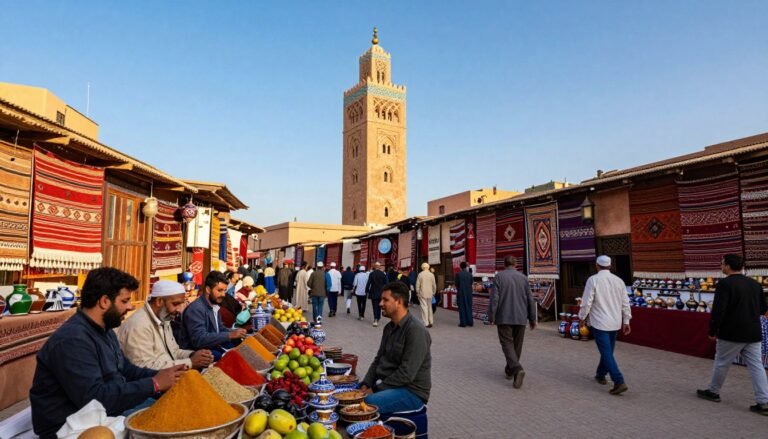
As the day cools, visit the famous Jemaa el-Fnaa Square. This bustling spot turns into a lively show of street performers, food stalls, and local musicians at sunset. It’s a feast for your senses, with the smell of Moroccan cuisine everywhere.
Recommended Restaurants for Your First Moroccan Meal
For your first Moroccan meal, try a restaurant near Jemaa el-Fnaa. Café de France and Al Fassia are top choices for authentic dishes. Don’t miss the tagine or couscous to truly experience Moroccan food.
Day 2: Discovering Marrakech’s Historic Treasures
Your second day in Marrakech is a journey through time. You’ll visit historic sites that have shaped the city’s identity. You’ll explore some of Marrakech’s most significant landmarks, gaining a deeper understanding of the city’s rich cultural heritage.
Morning: Bahia Palace and Saadian Tombs
Start your day at the Bahia Palace. It’s a masterpiece of Islamic craftsmanship. You’ll see the finest woodwork and tile-making skills of its era.
Later, head to the Saadian Tombs. This historic site was rediscovered in 1917. It features intricate architecture and beautiful craftsmanship.
Afternoon: Majorelle Garden and Yves Saint Laurent Museum
In the afternoon, visit the Majorelle Garden. It’s a stunning botanical garden created by French artist Jacques Majorelle. The garden is also home to the Yves Saint Laurent Museum.
The museum houses a collection of the designer’s work and memorabilia. It offers insights into his inspiration and creative process.
Evening: Navigating the Souks Like a Pro
As the evening approaches, you’ll learn how to navigate the bustling souks like a local. You’ll get tips and tricks to find the best bargains and souvenirs. This will make your shopping experience enjoyable and memorable.
| Historic Site | Highlights |
|---|---|
| Bahia Palace | Intricate woodwork, tile-making, Islamic craftsmanship |
| Saadian Tombs | Intricate architecture, beautiful craftsmanship, historical significance |
| Majorelle Garden | Stunning botanical garden, diverse plant species, artistic inspiration |
Day 3: Atlas Mountains Day Trip from Marrakech
Explore the Atlas Mountains’ natural beauty and rich culture on a guided day trip from Marrakech. This trip combines amazing landscapes, traditional Berber villages, and fun outdoor activities.
Tour Options and What to Expect
There are many tour options for the Atlas Mountains day trip. You can pick from guided hikes, visits to Berber villages, or a mix of both. Tours usually include transport from Marrakech, a local guide, and lunch at a Berber home or local restaurant.
Think about the tour’s length and how hard it is. Some hikes are moderate, while others are easier. Make sure to check what’s included and what’s extra, like activity fees or attraction entrance costs.
Highlights: Berber Villages, Waterfalls, and Mountain Views
The Atlas Mountains day trip has many exciting spots. You’ll see traditional Berber villages and learn about their culture. Many tours also visit the Setti Fatma waterfalls, perfect for a picnic or a swim in natural pools.
Scenic drives and hikes provide stunning mountain views. You’ll see different plants and animals, like olive groves and argan trees. This trip is a great mix of nature, culture, and adventure, making it unforgettable.
Day 4: Marrakech to Sahara Desert – The Scenic Route
Day 4 takes you from Marrakech to the Sahara Desert. This journey is filled with natural beauty and cultural significance. It’s a mix of adventure, history, and relaxation, making it unforgettable.
Morning Departure and Road Trip Essentials
Start early on Day 4 as you leave Marrakech for the Sahara Desert. Bring essentials like water, snacks, sunscreen, and a camera. The drive is long but scenic, showing off Morocco’s diverse landscapes.
Ait Ben Haddou UNESCO Site Visit
A highlight is visiting Ait Ben Haddou, a UNESCO World Heritage Site. This ancient city has been in movies and shows Morocco’s history and architecture. It’s a must-see for history buffs and architecture lovers.
Evening: Camel Trek and Night in a Desert Camp
Arrive at the Sahara Desert in the evening for a camel trek. Watch the sunset paint the sky with colors. Then, enjoy local food and relax under the stars in a desert camp.
Staying in a desert camp is a unique part of your trip. It lets you disconnect and connect with nature and local culture.
Day 5: Sahara Desert to Fes – Crossing the Middle Atlas
The Sahara Desert sunrise will wake you up on Day 5. You’re off to the Middle Atlas mountains to reach Fes. Take a moment to enjoy the desert’s calm and beauty before leaving your camp.
Desert Sunrise Experience
The sun’s rise over the dunes paints the sky with colors. It’s a moment of serene beauty, a perfect start. Take photos, but also enjoy the moment fully.
The Journey Through Changing Landscapes
Traveling from the Sahara to Fes, you’ll see landscapes change. From sand dunes to the Middle Atlas mountains in Morocco. The trip is part of the adventure, showing Morocco’s natural beauty.
| Region | Landscape | Key Features |
|---|---|---|
| Sahara Desert | Desert Dunes | Sunrise over dunes, camel trekking |
| Middle Atlas | Mountainous | Berber villages, waterfalls, cedar forests |
| Fes | Urban/Historic | Ancient medina, Al-Attarine Madrasa, rich cultural heritage |
Evening Arrival in Fes – First Impressions
Arriving in Fes, you’ll notice its unique character and history. The ancient medina is full of experiences. Your Fes arrival starts your exploration of Morocco’s cultural gem.
After settling in, explore the streets. Absorb the atmosphere and local culture. Your Fes adventure is just starting, with many experiences to come.
Day 6: Exploring the Medieval Medina of Fes
Fes El Bali, the oldest walled city in the world, is waiting for you on Day 6. As you walk through its narrow streets, you’ll feel the rich history and culture of Fes all around you.
Morning: Fes El Bali Guided Tour
Start your day with a guided tour of Fes El Bali. You’ll see historic landmarks and hidden gems. Your guide will show you the bustling alleys and share stories of the city’s past.
Afternoon: Tanneries and Artisan Workshops
Next, visit the famous tanneries in Fes. You’ll see the traditional leather-making process. You’ll also explore local artisan workshops and see the craftsmanship of the souks.
Evening: Authentic Dining in a Traditional Riad
In the evening, enjoy authentic Moroccan cuisine in a traditional riad. Experience the warm hospitality of Moroccans. Savor local flavors and relax in the serene atmosphere of your riad.
By the end of your day in Fes El Bali, you’ll deeply appreciate its medieval charm and rich cultural heritage.
Day 7: Chefchaouen Day Trip – Morocco’s Blue City
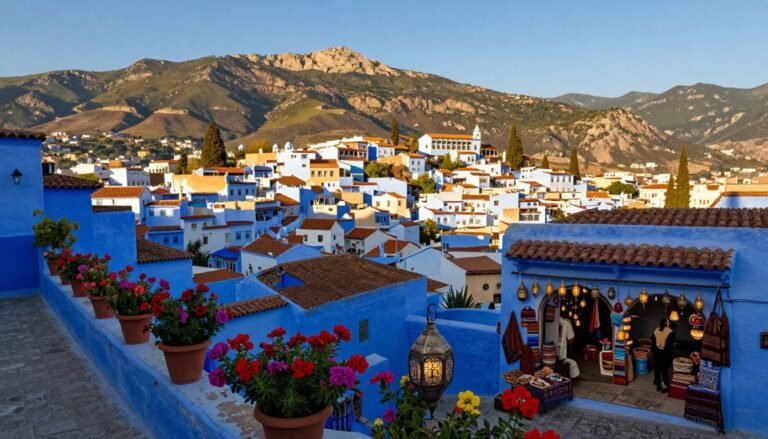
Chefchaouen, known as Morocco’s blue city, is a perfect day trip spot. It offers stunning views and great photo chances. You’ll see blue buildings, narrow streets, and the Rif Mountains in the background.
Transportation Options to Chefchaouen
To reach Chefchaouen from Fes, you have a few choices. You can book a private driver for the day, which is pricey but convenient. Or, you can take a bus or grand taxi. The trip takes about 4-5 hours, depending on traffic.
Exploring the Blue Streets and Photography Spots
In Chefchaouen, explore the blue streets, visit the Kasbah, and see the Spanish Mosque views. The town is small, so walking is easy. Try to take photos during the golden hour for the best light.

Return to Fes or Departure Preparations
After a day in Chefchaouen, head back to Fes. Think about your amazing Morocco trip. If you’re leaving, start packing up memories of the blue city.
Going back to Fes or heading home, Chefchaouen is a great trip ender for your 7-day Morocco adventure.
Transportation Guide for Your Morocco Itinerary
To make the most of your 7-day Morocco itinerary, think about how you’ll get around. Morocco has many ways to travel, each with its own good and bad points.
Private Drivers vs. Public Transport: Pros and Cons
Deciding between private drivers and public transport depends on what you want. Private drivers give you flexibility and a personal touch, letting you plan your trip your way. But, it’s pricier. Public transport, on the other hand, is cheaper and lets you see the local life. Yet, it might not be as comfy or flexible.
- Private Drivers: Pros include personalized service, flexibility, and comfort. Cons include higher costs and potential language barriers.
- Public Transport: Pros include affordability, local experience, and extensive networks. Cons include less comfort and potential language barriers.
Train Travel Between Major Cities
Morocco’s train network, run by ONCF, is both efficient and comfy. It links big cities like Marrakech, Fes, and Rabat. Taking the train is a smart choice for long trips without the stress of driving.
- Book your tickets early to get the best deals.
- Choose from different classes to match your comfort level.
- Enjoy the views of Morocco’s varied landscapes.
Should You Rent a Car in Morocco?
Renting a car in Morocco can be great if you like being free and flexible. But, you should think about the driving here and the possible problems.
- Pros: Flexibility, independence, and the chance to see hidden spots.
- Cons: Chaotic roads, language issues, and parking problems in old towns.
The best way to get around Morocco depends on what you value most, your budget, and what you like. By looking at the good and bad of each option, you can choose wisely and enjoy your trip more.
Where to Stay During Your 7-Day Morocco Trip
Planning your 7-day Morocco trip means finding the right place to stay. Morocco has many options, from traditional riads to modern hotels. Each one has its own special charm.
Traditional Riads: The Authentic Moroccan Experience
Traditional riads are a key part of Moroccan architecture. They offer a real and cozy experience. With their beautiful gardens and detailed decor, they are a peaceful escape from Marrakech or Fes’s busy streets.
Staying in a riad lets you dive into local culture. You’ll also get to enjoy the warm welcome of the locals.
Recommended Accommodations for Each Destination
In Marrakech, choose a riad in the medina like Riad Yacout or Dar Attajmil. It’s the best way to experience the city. For the Sahara Desert, pick a desert camp like Merzouga Luxury Camp. It’s perfect for camel rides and gazing at the stars.
In Fes, riads like Riad Fes or Dar Roumana mix old charm with modern comforts. They’re a great choice.
- Marrakech: Riad Yacout, Dar Attajmil
- Sahara Desert: Merzouga Luxury Camp
- Fes: Riad Fes, Dar Roumana
Booking Tips and Average Costs
Book your stay through trusted sites like Booking.com or Airbnb. Always read the reviews. Prices differ: riads in Marrakech cost $50 to $200 per night. Desert camps are $30 to $100 per night.
It’s wise to book early, especially when many people are traveling.
Essential Tips for First-Time Visitors to Morocco
Getting ready for Morocco? Knowing the local culture and customs is key. Morocco is full of history and traditions. Showing respect for these will make your trip better.

Cultural Etiquette and Customs
Morocco is a Muslim country. It’s important to understand the local etiquette. For example, dress modestly when visiting mosques or rural areas.
It’s also common to greet with a handshake or a kiss on the cheek. This depends on how well you know the person.
- Learn basic Arabic phrases like “hello” (As-salamu alaykum) and “thank you” (Shukran).
- Remove your shoes before entering mosques or homes.
- Be mindful of your body language in public; avoid public displays of affection.
Safety Tips for American Travelers
Safety is a big worry for many travelers, especially in new places. In Morocco, watch out for petty theft and scams. Always keep your things safe and be careful of overly friendly people.
Some key safety tips include:
- Staying informed about local conditions and demonstrations.
- Avoiding traveling alone at night.
- Keeping your hotel room door locked and using the hotel safe.
Packing Essentials for Your Moroccan Adventure
Packing the right things can really help your trip. Morocco’s weather changes a lot, from desert to mountains to cities.
Essentials to pack include:
- Comfortable walking shoes.
- Lightweight, breathable clothing and layers for cooler evenings.
- A hat, sunglasses, and sunscreen for desert trips.
- A power adapter for charging your devices.
Conclusion: Making the Most of Your Week in Morocco
As you wrap up your 7-day adventure in Morocco, you’ve gathered many memories. You’ve seen the lively cities and peaceful landscapes. Morocco has given you a mix of culture, history, and stunning views.
Looking back, you’ve probably seen Marrakech’s rich history and architecture. You’ve also seen the Sahara Desert’s beauty and Chefchaouen’s blue streets. This guide has helped you enjoy your trip and remember your Moroccan journey.
Your 7-day trip to Morocco has been full of experiences. You’ve dived into the local culture, history, and nature. This trip will help you plan better for the future, making your next adventure unforgettable.
FAQ
Is 7 days enough to visit Morocco?
7 days can be a good amount of time to see Morocco’s highlights. It depends on how you like to travel. With a good plan, you can see cities, experience culture, and visit famous sites.
What is the best Morocco itinerary for first-timers?
First-timers should consider a 7-day trip to Marrakech, the Atlas Mountains, the Sahara Desert, and Fes. This mix of city life, nature, and culture shows Morocco’s variety.
Should I visit Marrakech or Fes first?
Start with Marrakech for its energy and excitement. It’s a great introduction to Morocco. Marrakech also has an international airport and many places to stay.
Is the Sahara Desert worth visiting on a 7-day trip?
Yes, the Sahara Desert is worth seeing, even with just 7 days. Watching the sunset over the dunes and taking a camel trek are unforgettable. But, be ready for the long travel time.
Is Morocco safe for tourists?
Morocco is safe for tourists, with low crime rates. Still, stay safe by being aware of your surroundings and keeping an eye on your belongings.
What are some common travel mistakes to avoid in Morocco?
Avoid not respecting local customs and not bargaining at markets. Also, stay hydrated in the hot sun. Learning Arabic phrases and understanding the local culture helps too.
What’s the best time to visit Morocco?
Spring (March to May) and autumn (September to November) are the best times. The weather is mild, and there are fewer people. Summer is hot, and winters can be cool, especially in the mountains.
How do I get around Morocco?
Morocco has trains, buses, and private drivers for travel. Trains are good for big cities, buses are cheaper, and private drivers offer a personal touch.
What are some must-try experiences in Morocco?
Try the souks, local food like tagines and couscous, and historic sites like the Bahia Palace. Also, experience the local culture, like Gnawa music or visiting a riad.