Moroccan Tagine Explained: Types, Ingredients & Where to Eat
You’ve probably heard of Tagine, a dish filled with tradition and taste. But what is it really? It comes from North Africa and is named after the clay pot it’s cooked in.
The rich flavors and scents of Tagine come from a special cooking method. Ingredients are cooked slowly in a sealed pot. This lets the flavors mix together perfectly. In this article, we’ll look at the different types of Tagine, the ingredients, and where to try it.
Key Takeaways
- Understanding the origins and cultural significance of Tagine.
- Exploring the different types of Tagine and their ingredients.
- Learning about the traditional cooking method and its benefits.
- Discovering where to enjoy authentic Tagine.
- Comparing the differences between a Tagine pot and dish.
What Is Moroccan Tagine? The Dish and the Pot Explained
The term ‘Tagine’ means both a traditional North African dish and the clay pot it’s cooked in. This shows how important the pot is in making the meal.
The Dual Meaning of Tagine
A Tagine is the earthenware pot with a special conical lid, or it’s the slow-cooked stew made in it. The pot’s design is key. It lets steam condense and return to the dish, making it tender and flavorful.
Historical Origins of Tagine Cooking
Tagine cooking comes from North African cuisine, starting with the Berber tribes. Cooking ingredients slowly in a clay pot over low heat has been a tradition for centuries. It allows flavors to blend well. Over time, each region has added its own twist to the technique.
Cultural Significance in North African Cuisine
Moroccan Tagine is more than food; it’s a cultural symbol. It’s served at special events, showing hospitality and community. The dish reflects Morocco’s rich cultural mix, influenced by Arabs, Mediterraneans, and Africans.
Some key points about Tagine’s cultural importance include:
- It’s a big part of social gatherings and celebrations.
- The cooking method is both an art and a science.
- It uses local and seasonal ingredients, showing the country’s farming traditions.
Understanding Tagine’s cultural background helps us appreciate this traditional Moroccan dish more. It shows its importance in North African cuisine.
The Traditional Tagine Pot: Design and Function
The tagine pot is at the heart of Moroccan cuisine. It’s a cooking vessel perfected over centuries. This traditional earthenware pot is more than just a cooking vessel. It’s a key to understanding Morocco’s rich culinary heritage.
Anatomy of a Clay Tagine Pot
The clay tagine pot has a thick, heavy base and a conical lid. The base is made from clay or earthenware, great for heat retention. The conical lid helps steam condense and then drips back onto the food, keeping it moist and flavorful.
How the Conical Lid Creates Perfect Cooking Conditions
The conical lid of the tagine pot is key to perfect cooking. As food cooks, steam rises and condenses on the lid. Then, it drips back down, ensuring even cooking and keeping the dish moist.
Modern vs. Traditional Earthenware Cookware
Modern cookware has many materials and designs. But traditional earthenware tagine pots are unmatched in heat distribution and moisture retention. The choice between modern and traditional cookware depends on personal preference and the cooking experience desired.
The Science Behind Moroccan Tagine Cooking
Moroccan Tagine cooking is a science that brings out rich flavors and tender textures. It’s all about slow-cooking and using the special earthenware pot.
Slow-Cooking Method and Its Benefits
Slow-cooking is key to Moroccan Tagine. It makes tough ingredients tender and flavorful. The slow process blends spices and ingredients, creating a complex flavor.
When you slow cook Moroccan food, everything comes together. This results in a dish that’s hearty and full of aroma.
Temperature Distribution in Earthenware Pots
The earthenware pot is essential in Moroccan cooking. It spreads heat evenly, ensuring food cooks consistently. This even heat is vital for slow-cooking without burning or overcooking.
Why This Cooking Style Enhances Flavors
Slow-cooking and the earthenware pot boost the flavors of Moroccan Tagine. As ingredients cook slowly, they release their flavors and aromas. The conical lid traps these, making the dish moist and flavorful.
The Moroccan Tagine spices, like Ras el Hanout, add to the flavor. This makes each Tagine a true culinary delight.
Most Popular Types of Moroccan Tagine
Moroccan Tagine is more than just one dish. It’s a collection of recipes from different regions. Each region uses its own mix of ingredients and spices.
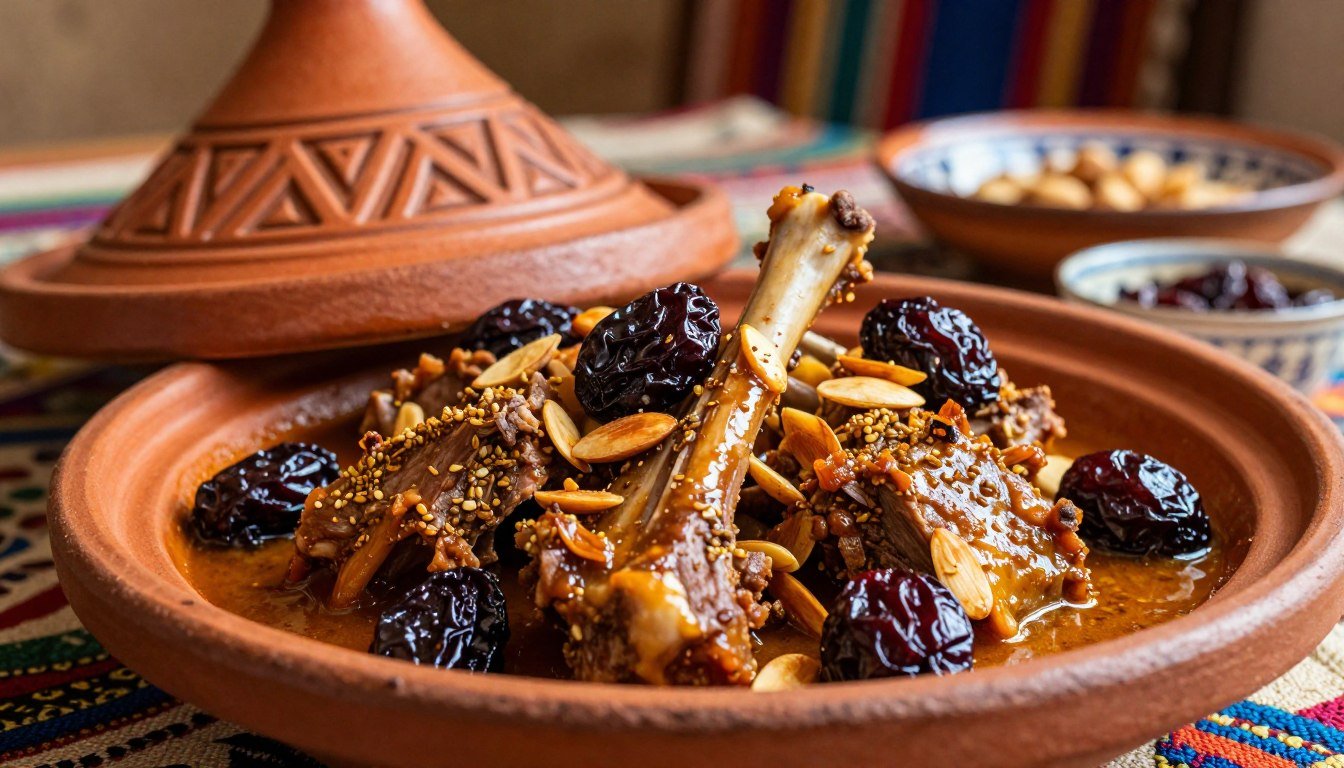
Lamb Tagine with Prunes and Almonds
Lamb Tagine with prunes and almonds is a beloved Moroccan dish. The prunes add sweetness, while the almonds add crunch. Together, they make the lamb tender and flavorful.
To make this Tagine, you need lamb, prunes, almonds, onions, garlic, ginger, and Moroccan spices. The slow cooking makes the lamb tender and easy to shred.

Chicken Tagine with Preserved Lemons and Olives
Chicken Tagine with preserved lemons and olives is known as Djaj Mhammer. The preserved lemons and olives give the chicken a salty, tangy flavor.
This recipe includes chicken, preserved lemons, olives, garlic, ginger, and spices. The preserved lemons and olives are key to its unique taste.
Kefta Tagine with Eggs
Kefta Tagine with eggs is a hearty dish, great for brunch. It features meatballs made with spices and herbs, cooked in a tomato sauce with eggs.
To make Kefta Tagine, you need ground meat, onions, parsley, cilantro, spices, tomatoes, and eggs. The meatballs and tomato sauce are cooked together, then eggs are added on top.
Vegetable and Legume Tagines for Vegetarian Options
Vegetarian Tagines are just as tasty and satisfying. They use a variety of vegetables and legumes. These dishes are perfect for vegetarians and vegans.
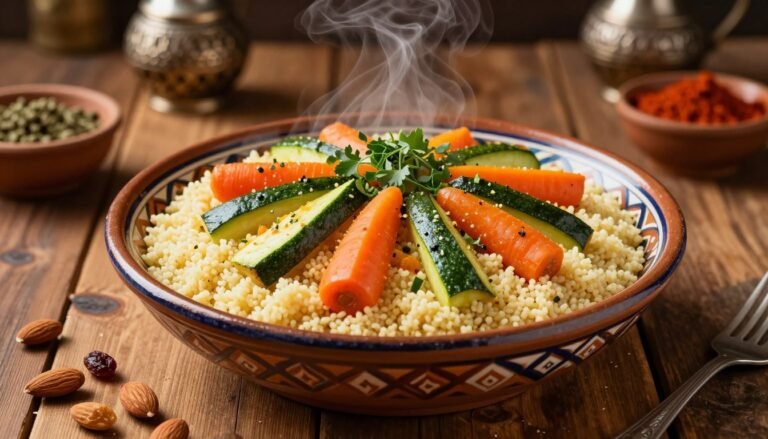
Common ingredients include chickpeas, lentils, and vegetables like carrots, zucchini, and bell peppers. They are cooked slowly to blend flavors and tenderize vegetables.
| Tagine Type | Main Ingredients | Flavor Profile |
|---|---|---|
| Lamb Tagine with Prunes and Almonds | Lamb, prunes, almonds, onions, garlic, ginger | Sweet, savory, slightly crunchy |
| Chicken Tagine with Preserved Lemons and Olives | Chicken, preserved lemons, olives, garlic, ginger | Salty, tangy, rich |
| Kefta Tagine with Eggs | Ground meat, onions, parsley, cilantro, tomatoes, eggs | Hearty, spicy, savory |
| Vegetable and Legume Tagines | Chickpeas, lentils, various vegetables, spices | Diverse, rich, comforting |
Essential Ingredients in Authentic Moroccan Tagine
To make a real Moroccan Tagine, you need to know the key ingredients. These ingredients have been chosen over centuries. They make the dish special.
Protein Options: Traditional Choices
Lamb, chicken, or beef are the main proteins in Moroccan Tagine. Lamb is a favorite, often paired with prunes and almonds. This mix creates a delicious sweet and savory taste.
Vegetables and Fruits Commonly Used
Onions, carrots, and potatoes are common vegetables. Fruits like prunes and apricots add sweetness. Together, they make the dish rich and complex.
The Role of Preserved Foods (Lemons, Olives)
Preserved lemons and olives are key in Moroccan Tagine. They bring a salty, tangy flavor. Lemons are pickled in brine, giving them a special taste.
Nuts and Dried Fruits for Sweetness and Texture
Nuts like almonds and dried fruits like prunes and apricots add sweetness and texture. They’re often mixed with spices for a balanced taste.
| Ingredient | Role in Tagine |
|---|---|
| Preserved Lemons | Adds salty, tangy flavor |
| Olives | Contributes to savory flavor |
| Nuts and Dried Fruits | Adds sweetness and texture |
Using these ingredients, you can make a true Moroccan Tagine. It’s full of flavor and history. Try different mixes to find your favorite.
Spices That Define Moroccan Tagine
Moroccan Tagine is known for its complex spice mix. This mix makes the dish a true culinary masterpiece. The rich flavors and aromas come from the spices carefully chosen and blended.
Ras el Hanout: The King of Spice Blends
Ras el Hanout, or “head of the shop,” is a mix of up to 30 spices. It’s the heart of Moroccan cooking and key to Tagine’s flavor. A chef says, “Ras el Hanout is more than spices; it’s Moroccan cooking’s soul.”
“The secret to a great Tagine lies in the quality of your Ras el Hanout.”
Essential Individual Spices
While Ras el Hanout is important, individual spices also define Tagine’s flavor.
Saffron: The Golden Treasure
Saffron is a luxury in Moroccan cooking. It brings a sweet and earthy taste to the Tagine.
Cumin, Ginger, and Turmeric
Cumin adds a warm, earthy taste. Ginger brings a spicy kick. Turmeric balances the sweetness with its bitter taste. These spices together create a rich flavor.
Sweet and Savory Balance in Tagine Spicing
Finding the right balance between sweet and savory is key in Tagine. Spices and ingredients like dried fruits and nuts make the taste complex. Exploring Moroccan Tagine, you’ll see balancing flavors is what makes it so appealing.
How to Cook an Authentic Moroccan Tagine: Step-by-Step Guide
The secret to a real Moroccan Tagine is in the cooking, not just the ingredients. You need to know the traditional ways that have been passed down for generations.
Preparing Your Tagine Pot
Before cooking, prepare your Tagine pot. If it’s clay, soak it and its lid in water for 30 minutes. This stops the clay from cracking. For a new pot, some people season it with oil and heat it slowly to make it last longer.
Layering Ingredients the Traditional Way
Layering ingredients is key in cooking a Tagine. Start with onions, garlic, and ginger at the bottom. Then, add your protein like lamb or chicken. Finish with spices, herbs, and other ingredients. This way, flavors mix well during slow cooking.
Cooking Times and Temperature Control
Cooking a Tagine needs patience and careful temperature control. Traditionally, it’s cooked over low heat for 1 to 2 hours. This slow cooking lets flavors fully develop. Use low heat on your stovetop or oven, adjusting time based on your recipe.
Signs Your Tagine Is Perfectly Cooked
How do you know your Tagine is done? The meat should be tender, and flavors rich and balanced. The sauce should be thick, coating everything. A good Tagine also fills your kitchen with a wonderful aroma and slightly caramelized ingredients.
| Cooking Method | Cooking Time | Temperature |
|---|---|---|
| Traditional Stovetop | 1-2 hours | Low Heat |
| Oven | 1-2 hours | 300°F (150°C) |
By following these steps and traditional methods, you can make a flavorful Moroccan Tagine full of history.
Making Moroccan Tagine at Home in America
You don’t need to go to Morocco to enjoy a delicious Tagine. You can make it at home in America with the right help. The key is to know where to find ingredients, make substitutions, adapt recipes, and find Tagine pot alternatives.
Finding the Right Ingredients in American Stores
Many Moroccan Tagine ingredients are in American supermarkets or specialty stores. Ras el hanout spice blend is often in the international section or online. Preserved lemons and olives might need a trip to a Middle Eastern market, but you can also buy them online.
Substitutions That Work
Can’t find preserved lemons? Use fresh lemon juice and salt instead. For ras el hanout, make your own mix with spices like cumin and coriander. Olives are easy to find, but look for green or Kalamata in specialty stores.

Adapting Recipes for Modern Kitchens
Traditional Tagine recipes use slow cooking over low heat. In a modern kitchen, use a slow cooker or Dutch oven. Adjust cooking times for your equipment and ingredients.
Tagine Pot Alternatives If You Don’t Have One
Without a clay Tagine pot, use a Dutch oven or heavy pot with a lid. These can mimic the slow-cooking, moist heat of a traditional Tagine.
| Traditional Ingredient | American Substitute | Notes |
|---|---|---|
| Preserved Lemons | Fresh Lemon Juice + Salt | Mimics salty, tangy flavor |
| Ras el hanout | Homemade blend of cumin, coriander, cinnamon, ginger | Adjust proportions to taste |
| Clay Tagine Pot | Dutch Oven or heavy pot with lid | Replicates slow-cooking conditions |
Regional Variations of Tagine Across Morocco
Tagine in Morocco shows the country’s rich food diversity. Each region in Morocco adds its own special touch to this traditional dish.
Marrakech Style Tagines
Marrakech is famous for its lively markets and delicious food. Marrakech style Tagines are often more complex and spiced. They often include dried fruits and nuts, showing the city’s history as a trade center.
Berber Tagines from the Atlas Mountains
In the Atlas Mountains, Berber people make Tagines that are hearty and simple. They use local ingredients like lamb or chicken. These Berber Tagines are cooked over open fires, giving them a smoky taste.
Coastal Variations with Seafood
By the coast, Tagines feature fresh seafood. Coastal Tagines might have fish, shrimp, or calamari. They are cooked with spices and herbs that bring out the seafood’s flavor.
| Region | Typical Ingredients | Cooking Method |
|---|---|---|
| Marrakech | Dried fruits, nuts, spices | Slow-cooked in clay pots |
| Atlas Mountains | Lamb, chicken, local herbs | Cooked over open fires |
| Coastal Areas | Seafood, fresh herbs, spices | Slow-cooked in clay pots |
These variations show Morocco’s rich food culture. They also show how Tagine can be made to fit local tastes and ingredients.
Where to Eat the Best Tagine in Morocco
Looking for the best Tagine in Morocco? You’ll find it in many places, from street food stalls to fancy restaurants. Morocco is famous for its delicious food, and Tagine is a big part of it. You can try it in many different settings.
Marrakech: From Street Food to Fine Dining
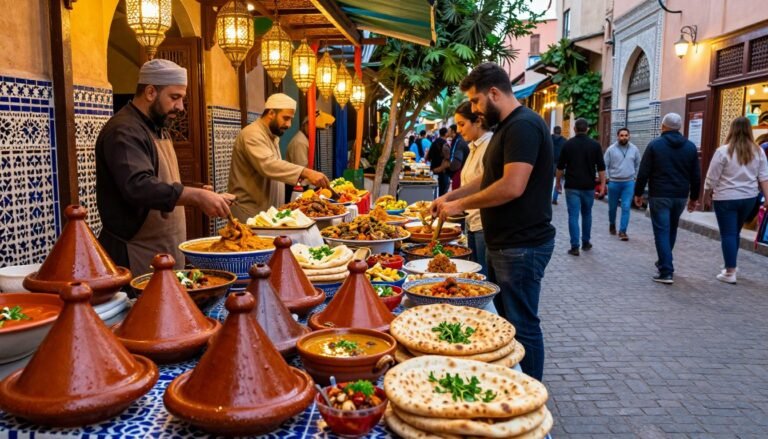
Marrakech is a dream for food lovers. It has many places to try Tagine. You can start at the Jemaa el-Fna food stalls. Here, local vendors serve up traditional Tagine and other Moroccan treats.
Jemaa el-Fna Food Stalls
These stalls are lively and authentic. They’re great for trying Tagine made with fresh, local ingredients.
Traditional Restaurants in the Medina
For a fancy meal, check out the medina’s traditional restaurants. They serve Tagine in a historic setting.
Rural Experiences: Authentic Berber Tagine
Head to the countryside for a real Berber Tagine experience. Berber communities welcome visitors to share their cooking traditions.
Local Favorites: Where Moroccans Eat Tagine
Want to see how Moroccans live? Eat where they do. Family-run places and local restaurants serve amazing Tagine. They give you a peek into Moroccan daily life.
In Marrakech or rural Morocco, the best Tagine is waiting for you. Enjoy the tasty flavors and the warm welcome of Morocco.
Conclusion: Embracing the Tagine Tradition
Exploring Moroccan Tagine is more than just finding a recipe. It’s diving into a centuries-old culinary tradition. This tradition is at the heart of Moroccan cuisine, where slow-cooked meals unite families and communities. By learning about Tagine’s history, ingredients, and cooking methods, you’re starting to embrace this vibrant culture.
Cooking Moroccan Tagine is a journey of flavors and aromas. It’s about experiencing the warmth of North African hospitality. As you make Tagine, you’ll find it encourages creativity while honoring its roots. Cooking for yourself or others, the Moroccan Tagine tradition will enrich your culinary adventures.
Adding Moroccan Tagine to your cooking enhances your taste and connects you to a rich heritage. So, use the flavors and techniques you’ve learned. Start your own Tagine adventure, exploring Moroccan cuisine and the joy of sharing meals.
FAQ
What is a Moroccan Tagine?
A Moroccan Tagine is a traditional North African dish. It’s also the earthenware pot it’s cooked in. The dish is a slow-cooked stew with meat, veggies, and dried fruits. It’s flavored with a mix of spices.
What is the traditional Moroccan Tagine pot made of?
The traditional pot is made from clay or earthenware. It has a special conical lid. This lid helps keep the stew moist and flavorful.
How do you cook a Moroccan Tagine?
To cook a Moroccan Tagine, start by layering ingredients in the pot. Begin with the meat, then add veggies and spices. Cover the pot with its lid and cook slowly over low heat.
What are the most popular types of Moroccan Tagine?
Popular types include lamb with prunes and almonds, chicken with preserved lemons and olives, and kefta with eggs. There are also many veggie and legume options for vegetarians.
Can you make Moroccan Tagine without a traditional Tagine pot?
Yes, you can make Moroccan Tagine without a traditional pot. Use a Dutch oven or a heavy pot with a tight lid. These can mimic the slow-cooking and moisture retention of a traditional pot.
Where can you eat authentic Moroccan Tagine in Morocco?
You can find authentic Moroccan Tagine in many places in Morocco. Try street food stalls in Jemaa el-Fna in Marrakech, traditional restaurants in the medina, and rural Berber communities in the Atlas Mountains.
What are the essential spices used in Moroccan Tagine?
Essential spices include Ras el Hanout, a mix of spices, and individual spices like saffron, cumin, ginger, and turmeric. These add depth and warmth to the dish.
Is Moroccan Tagine a healthy dish?
Moroccan Tagine can be healthy. It often uses lean meats, various veggies, and legumes. It’s cooked in a way that keeps moisture and flavor without needing much oil. But, it depends on the ingredients used.