Moroccan Street Food Guide: What to Try & Where
As I explored the lively markets of Morocco, I fell in love with the variety of traditional street food. The smells, tastes, and textures showed off the country’s deep food culture.
Moroccan cuisine offers everything from tasty tagines to delicious pastries. In this guide, I’ll show you the top street food spots in Morocco. You’ll learn about the must-try dishes and where to find them.
Key Takeaways
- Discover the most popular Moroccan street food dishes
- Learn where to find the best street food in Morocco
- Explore the unique flavors and ingredients of Moroccan cuisine
- Get insider tips on navigating the markets and stalls
- Experience the authentic flavors of Morocco’s culinary heritage
My Journey Through Morocco’s Culinary Streets
When I first entered Morocco’s culinary world, I was hooked by the flavors and the people’s warmth. The city buzzes with life, and it’s most alive in the streets. Here, the smells of spices, the sounds of food cooking, and the calls of vendors fill the air.
How I Fell in Love with Moroccan Street Food
My adventure through Morocco’s streets was a feast for my senses. I fell head over heels for the popular street food in Morocco. From tasty moroccan street snacks to full meals, each dish had its own tale of tradition and community.
Exploring the local food in Morocco streets showed me how important street food is here. It’s more than just a snack; it’s a way to connect with others.
What Makes Moroccan Street Food Special
Street food in Marrakech Jemaa el-Fna is famous for its lively vibe and wide variety. Moroccan street food stands out because of its unique flavors, fresh ingredients, and the culture it’s enjoyed in.
Every part of Moroccan street food, from the spices to the cooking methods, shows the country’s deep culinary history. It’s a mix of simplicity and elegance, welcoming everyone to enjoy it.
The Complete Moroccan Street Food Guide: Cultural Context
Moroccan street food is more than just food; it shows the country’s rich culture. Walking through Morocco’s lively streets, I saw how street food unites people. It also highlights the country’s food traditions.
The Role of Street Food in Moroccan Culture
Street food is key in moroccan food culture. It offers tasty, affordable meals to everyone. In Morocco’s lively food markets, you’ll find a variety of local moroccan food. This food shows the country’s rich culinary history.
Street food in Morocco is more than just food. It’s a way to connect with others. It builds a sense of community and friendship.
Regional Variations Across Morocco
Moroccan street food changes a lot from place to place. Each area has its own special food traditions. For example, medinas offer moroccan medina food with deep flavors. Coastal towns are known for their fresh seafood.
- In Marrakech, try the famous Maakouda potato fritters.
- In Fes, sample the traditional Khobz bread sandwiches.
- In Essaouira, enjoy the fresh grilled sardines.
When Moroccans Typically Eat Street Food
In Morocco, street food is a favorite for cheap food in morocco. It’s available all day. People usually eat it during lunch and snack times. Vendors offer a variety of fresh dishes then.
Looking for a quick snack or a full meal? Moroccan street food has it all. It’s a big part of the country’s food scene.
Bread-Based Moroccan Street Foods
Moroccan street food is filled with bread-based treats. From savory pancakes to sweet breads, there’s a lot to try. Bread is key in Moroccan cuisine, and street food is no different.
Msemen: Moroccan Square Pancakes
Msemen is a square flatbread, folded and fried until golden. You can have it plain, with honey, or filled with onions and spices. It’s a favorite in Moroccan street food.
Where to Find the Best Msemen
In Marrakech, Jemaa el-Fnaa square is the place for msemen. Vendors here offer some of the best, often with spices and herbs. In Fes, the medina’s streets have great msemen too.
Khobz: Traditional Moroccan Bread Sandwiches
Khobz is a traditional Moroccan bread for sandwiches. It’s filled with grilled meats, veggies, and cheese. Its simplicity hides its rich flavor and importance in street food culture.
Harcha: Semolina Bread with Honey
Harcha is semolina bread enjoyed with honey. It’s made with semolina flour, water, and salt, then cooked on a griddle. It’s a comforting treat for locals and visitors alike.
In conclusion, Moroccan street foods like msemen, khobz, and harcha show the country’s culinary variety. Each dish offers a unique taste, reflecting Morocco’s rich culture.
Fried Delights and Savory Snacks
As I explored Morocco’s lively streets, I found a world of fried treats and savory snacks. Moroccan street food is known for its flavors, textures, and smells. Fried foods are a big part of it.
Maakouda: Potato Fritters
Maakouda is a favorite in Morocco. It’s crispy potato fritters made from mashed potatoes, onions, and spices. They’re fried until golden and often served with dipping sauces.
Sfenj: Moroccan Doughnuts
Sfenj is a fried delight enjoyed in the morning. These doughnuts are fried and topped with honey or sugar. They’re a common breakfast or snack, often with mint tea.
Morning Ritual: When and Where to Enjoy Sfenj
For many Moroccans, eating Sfenj is a morning tradition. You can find vendors selling them in markets and street corners early in the day. Enjoying Sfenj with mint tea is a favorite combo.
Brochettes: Moroccan Kebabs
Brochettes, or Moroccan kebabs, are a must-try. They’re skewers of marinated meat grilled over an open flame. Brochettes are a hit on the streets, served with bread and spices.
Morocco’s fried and savory snacks show off the country’s rich food culture. Whether you prefer sweet Sfenj or savory Maakouda and Brochettes, there’s something for everyone.
Unique Moroccan Street Food Specialties
Exploring Morocco’s streets, I found a world of unique street foods. Moroccan cuisine is known for its rich flavors and diverse influences. The street food scene is no exception.
Babbouche: Snail Soup
Babbouche, or snail soup, is a must-try. It’s made by cooking snails in a spiced broth. The soup is served in small bowls with toothpicks to pull out the snails.
This dish is comforting and savory. It’s very popular during the colder months.
Finding the Best Snail Vendors
To try authentic Babbouche, visit bustling markets or street food stalls. Look for them in cities like Marrakech and Fez. The snails are fresh and cooked on the spot.
Grilled Sardines
Grilled sardines are a seafood specialty in coastal towns like Essaouira. Fresh sardines are marinated in olive oil, garlic, and spices. They’re then grilled over an open flame.
This dish is simple yet flavorful. It’s often served with lemon and crusty bread.
Tangia and Sheep Head: For the Adventurous Eater
Tangia and sheep head are for the adventurous. Tangia is a slow-cooked stew with meat, spices, and sometimes preserved lemons. It’s cooked in a clay pot.
Sheep head is a traditional dish where the entire head is slow-cooked. It’s served as a delicacy. Both dishes are rich in flavor and show Morocco’s culinary traditions.
Exploring Morocco’s street food is a culinary journey. You’ll find something for every palate. From Babbouche to grilled sardines, and even Tangia and sheep head, the experience is unforgettable.
Sweet Treats and Refreshing Drinks
As I explored Morocco’s lively streets, I found a world of sweet delights and cool drinks. These treats are as much a part of the culture as they are a joy to taste. Morocco’s street food is not just about savory foods; it’s also a paradise for those who love sweets and refreshing drinks.
Moroccan Mint Tea: The Street Beverage of Choice
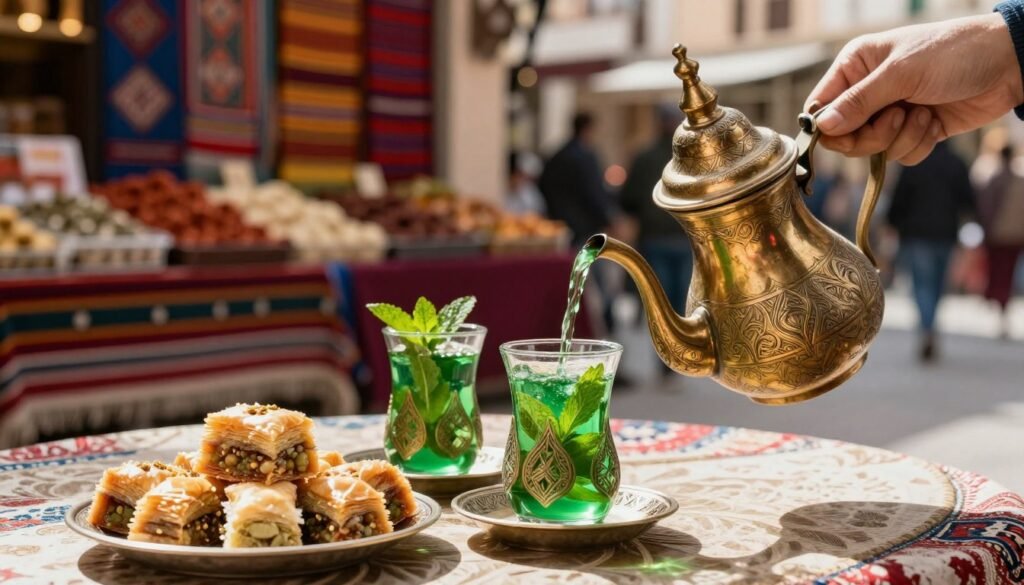
Moroccan Mint Tea is more than a drink; it’s a tradition. In Marrakech, vendors pour it high above the glass, creating a frothy top. This spectacle is as exciting as the taste itself. It’s a key part of Moroccan hospitality and a must-try in the street food scene.
Fresh Fruit Juices and Smoothies
Fresh fruit juices and smoothies are a refreshing part of Moroccan street food. Vendors mix different fruits, like oranges and berries, to make cool, refreshing drinks. These juices are not only tasty but also a great way to cool down on hot days.
Chebakia and Other Sweet Pastries
Chebakia is a must-mention in Moroccan sweets. It’s a fried dough pastry coated in honey, enjoyed during special times. Other pastries like makroud and ghriba also showcase Morocco’s rich culinary history.
In conclusion, Morocco’s street food scene offers a wide range of sweet treats and refreshing drinks. From Moroccan Mint Tea to fresh fruit juices and sweet pastries like Chebakia, there’s something for everyone.
Best Cities for Moroccan Street Food
Traveling through Morocco, I found each city has its own street food culture. From ancient medinas to modern cities, Moroccan street food shows the country’s rich food heritage.
Marrakech: Jemaa el-Fna Food Paradise
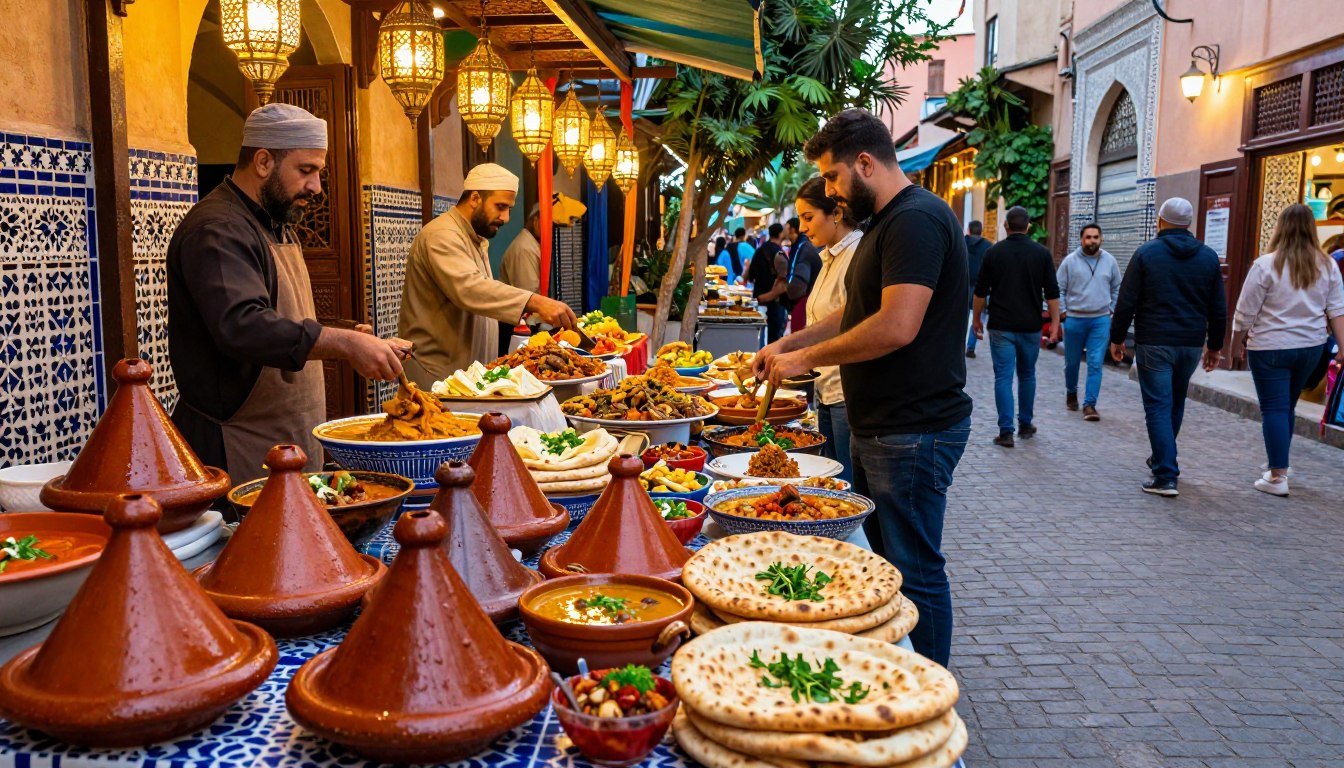
Marrakech is famous for Jemaa el-Fna square. It’s a UNESCO World Heritage site that turns into a food market at night. The smell of grilled meats and spices fills the air. Street food stalls offer dishes like harira and sweet pastries.
Must-Visit Food Stalls in Marrakech
- Try the famous Maakouda potato fritters at many stalls.
- Sample Sfenj, Moroccan doughnuts that are crispy outside and soft inside.
- Enjoy a warm bowl of harira, a traditional Moroccan soup.
Fes Medina: Ancient Culinary Traditions
Fes shows traditional Moroccan cuisine in its ancient medina. The streets have food stalls with local dishes like Babbouche (snail soup) and pastries.
Essaouira: Coastal Street Food Gems
Essaouira is a charming coastal town known for fresh seafood. You can find grilled fish and seafood delicacies at local stalls, perfect for seafood fans.
Casablanca and Tangier: Modern Meets Traditional
Cities like Casablanca and Tangier mix modern food trends with traditional Moroccan flavors. You can find street food stalls with classic dishes and modern cafes with innovative cuisine.
In conclusion, Morocco’s cities offer a rich street food experience. Whether you’re in historic medinas or modern scenes, there’s something for everyone.
Practical Tips for Enjoying Street Food in Morocco
Exploring Morocco’s street food taught me it’s safe and tasty with a few tips. Here, I’ll share how to enjoy Moroccan street food safely and deliciously.
Is Moroccan Street Food Safe? My Experience
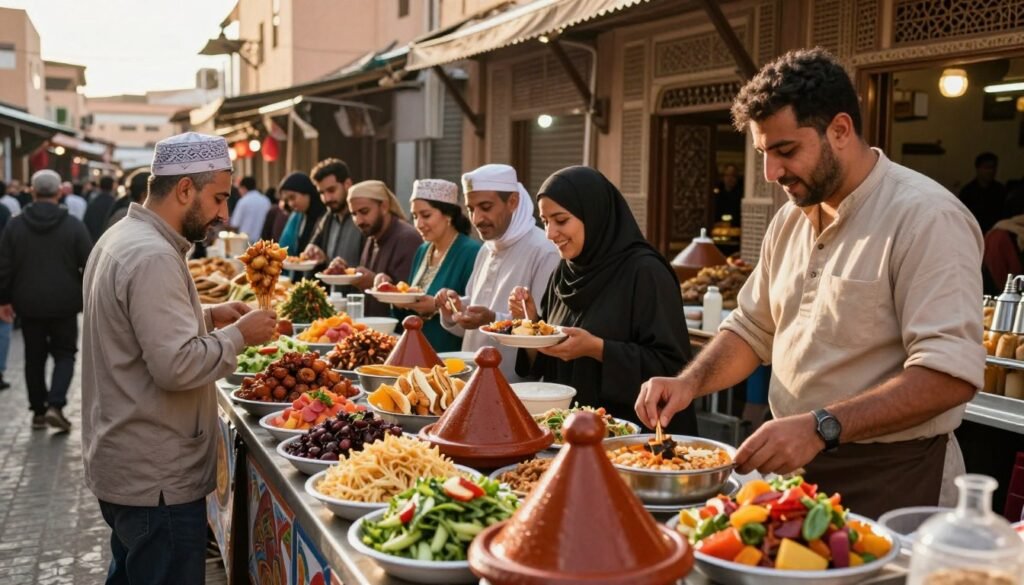
Many wonder if Moroccan street food is safe. From my experience, it’s both safe and tasty. Just look for busy stalls with fresh, popular food.
How to Choose Safe Food Stalls
Choosing a safe street food stall is easy. Look for cleanliness and proper food handling. Stalls loved by locals are usually safe and authentic.
Budget Guide: Street Food Prices in Morocco
Moroccan street food is tasty and affordable. Prices range from 10 to 30 dirhams for a meal. Try Maakouda or Sfenj for around 5 to 10 dirhams each.
Best Times of Day for Street Food Hunting
Best times for street food vary. Try Msemen or Khobz for breakfast. For hot meals, lunch and dinner are best. Snacks like fruits or pastries are available in the late afternoon.
How to Order Like a Local
Ordering like a local makes your experience better. Say hello and clearly state what you want. Learning Arabic phrases helps too.
With these tips, you’re ready to enjoy Moroccan street food. Whether you’re a seasoned traveler or new to Morocco, these guidelines will help you enjoy the street food scene confidently.
Conclusion: Embracing the Flavors of Morocco’s Streets
Reflecting on my Moroccan food journey, I see that every dish has a story. From sizzling liver sandwiches to delicate gazelle horns with almonds, each bite celebrates Moroccan cuisine’s rich flavors.
Exploring Moroccan street food is more than food; it’s a way to connect with the city. Whether in Marrakech’s Jemaa el-Fnaa or Fes, the food leaves a lasting impression.
Planning a trip to Morocco? Dive into the local street food scene. This guide will help you explore vibrant markets and taste the best of Moroccan cuisine. So, take a bite, enjoy the flavors, and experience authentic Moroccan food.
FAQ
What is the best Moroccan street food to try?
You should try Msemen, Khobz, Maakouda, Sfenj, and Babbouche. These dishes show the variety and richness of Moroccan food.
Is Moroccan street food safe to eat?
Moroccan street food is usually safe if you’re careful. Look for stalls with lots of customers. This means the food is fresh. Also, choose stalls that are clean and well-kept.
What are the typical prices for street food in Morocco?
Street food in Morocco is affordable. Most dishes cost between 10-50 MAD (1-5 USD). Msemen and Khobz are often around 10-20 MAD (1-2 USD).
What are the best times to eat street food in Morocco?
Street food is available all day in Morocco. The best times are lunch (12-3 pm) and dinner (6-10 pm). Some stalls also offer breakfast or late-night snacks.
How do I order street food like a local in Morocco?
To order like a local, learn basic Arabic phrases. Say “Shukraan” (thank you) and “Kam laha?” (how much?). Be clear and direct, and don’t hesitate to ask for suggestions or changes.
What are some unique Moroccan street food specialties that I shouldn’t miss?
Don’t miss Babbouche (snail soup), Grilled Sardines, and Tangia and Sheep Head. These dishes are adventurous but worth trying for a real taste of Morocco.
Can I find vegetarian or vegan options in Moroccan street food?
Yes, many Moroccan street foods are vegetarian or vegan. Msemen, Khobz, and Sfenj are good options. Always ask about ingredients and how they’re prepared to meet your dietary needs.
Which cities in Morocco are best for street food?
Marrakech, Fes, Essaouira, Casablanca, and Tangier are great for street food. Each city offers unique flavors and specialties. Explore different areas to find the best street food.