Moroccan Mint Tea: Culture, Ritual & Etiquette
When you enter the lively world of Moroccan culture, you’re hit with the sweet scent of mint tea. It’s more than a drink; it’s a key part of welcoming guests, showing friendship, and telling the story of Morocco’s past.
You’re about to explore the fascinating culture, rituals, and rules of traditional Moroccan mint tea. You’ll learn how it’s made and why it’s so important to the Moroccan identity.
Key Takeaways
- Discover the historical significance of Moroccan mint tea.
- Learn about the traditional preparation methods.
- Understand the role of mint tea in Moroccan hospitality.
- Explore the cultural nuances associated with Moroccan tea culture.
- Gain insights into the etiquette of serving and drinking mint tea.
The Rich History of Moroccan Mint Tea
Exploring the history of Moroccan mint tea shows a mix of trade, cultural exchange, and tradition. This refreshing drink has roots in the global tea trade.
The Journey of Tea to North Africa
The story of tea coming to North Africa is intriguing. It’s about different cultures and trade routes coming together. Tea first arrived in the 18th century through the British tea trade. This started a long tea culture in Morocco.
British Tea Trade Influence in the 18th Century
The British tea trade was key in bringing tea to Morocco. As the British expanded their trade, tea became more common. Its popularity grew among locals.
Chinese Gunpowder Tea’s Arrival in Morocco
Chinese Gunpowder tea also played a big role in Moroccan mint tea. This tea, known for its unique flavor and tightly rolled leaves, became a favorite in Morocco.
Evolution into a National Symbol
Tea became a symbol of Morocco over time. The mix of Chinese tea, local mint, and sugar created a unique taste. Today, mint tea is a big part of Moroccan life.
Tea Routes Through North Africa
Tea traveled many routes across North Africa, changing local cultures. The table below shows some key tea routes and their importance:
| Tea Route | Description | Significance |
|---|---|---|
| British Trade Route | Introduced tea to Morocco through British trade | Started tea culture in Morocco |
| Chinese Silk Road | Brought Chinese Gunpowder tea to the region | Changed the taste of Moroccan mint tea |
| Trans-Saharan Route | Connected Morocco to sub-Saharan Africa | Helped exchange goods and cultural practices |
The history of Moroccan mint tea is a rich mix of cultural exchange and trade. Knowing this history helps us appreciate mint tea’s importance in Moroccan life.
Traditional Moroccan Mint Tea: A Cultural Cornerstone
In the heart of Moroccan culture, mint tea holds a special place. It’s not just a drink but a key part of Moroccan hospitality and daily life.
The Daily Ritual in Moroccan Homes
In Moroccan homes, mint tea is a big tradition. It brings families together, no matter the time of day. The customs around tea are full of meaning.
Morning, Afternoon, and Evening Tea Customs
Tea’s importance doesn’t change, even if the time does. In the morning, it’s a refreshing start. In the afternoon, it’s a break. And in the evening, it brings everyone together.
Family Gathering Significance
Tea time is when families bond. They share stories and experiences. This familial bonding is key to Moroccan culture.
Regional Variations Across Morocco
Morocco’s regions each have their own mint tea twist. From the Atlas Mountains to coastal towns, each variation shows the country’s rich culture.
| Region | Variation | Characteristics |
|---|---|---|
| Atlas Mountains | Mountain Mint Tea | Stronger brew, less sugar |
| Coastal Towns | Coastal Fresh Mint | Milder flavor, more herbs |
| Desert Regions | Desert Delight | Sweeter, with added spices |
Social Bonding Through Tea Sharing
Sharing tea is a powerful way to bond. It builds connections and strengthens relationships. The social tea culture in Morocco is essential to community life.
Exploring Moroccan mint tea reveals it’s more than a drink. It’s a way of life, deeply rooted in Moroccan society’s daily rituals and social fabric.
The Essential Ingredients of Authentic Mint Tea
Moroccan mint tea is made with special ingredients that give it its unique taste. To enjoy this traditional drink, knowing what makes it special is key.
Chinese Gunpowder Green Tea
At the core of Moroccan mint tea is Chinese Gunpowder green tea. It’s known for its strong flavor and unique shape. The leaves are rolled into small pellets to keep the tea fresh.
Quality Selection and Importance
Choosing high-quality Gunpowder green tea is vital. It sets the tea’s flavor. Look for tea that’s tightly rolled and has a bright green color.
Traditional Storage Methods
To keep the tea fresh, it’s stored in a cool, dry place. It should be kept away from sunlight. This helps keep the tea’s flavor delicate.
Fresh Moroccan Mint Varieties
Fresh mint is another key ingredient in Moroccan mint tea. The most used is Nana mint, known for its sweet taste.
Nana Mint: The Preferred Choice
Nana mint is the top choice for its tender leaves and mild flavor. It pairs well with the strong green tea. Its quality can change with the season.
Seasonal Variations and Alternatives
While Nana mint is the favorite, other mints can be used based on the season. The tea’s taste depends a lot on the mint’s freshness.
The Role of Sugar in Moroccan Tea
Sugar is important in balancing the green tea’s bitterness. The amount of sugar can vary, but it’s a must in the traditional recipe.
Moroccan mint tea is a mix of flavors that work together. The green tea, fresh mint, and sugar make a refreshing and lively drink.
The Art of Preparation: A Step-by-Step Process
To truly enjoy Moroccan mint tea, you must learn how to make it. This process is filled with tradition. It’s not just about making tea; it’s a ritual with special equipment, a certain way of doing things, and a deep understanding of its cultural value.
Traditional Teapots and Equipment
The traditional teapot, called a Berrad, is key in making Moroccan mint tea. The Berrad is usually made of metal and has a special shape. This shape helps in brewing the tea well.
The Berrad (Moroccan Teapot)
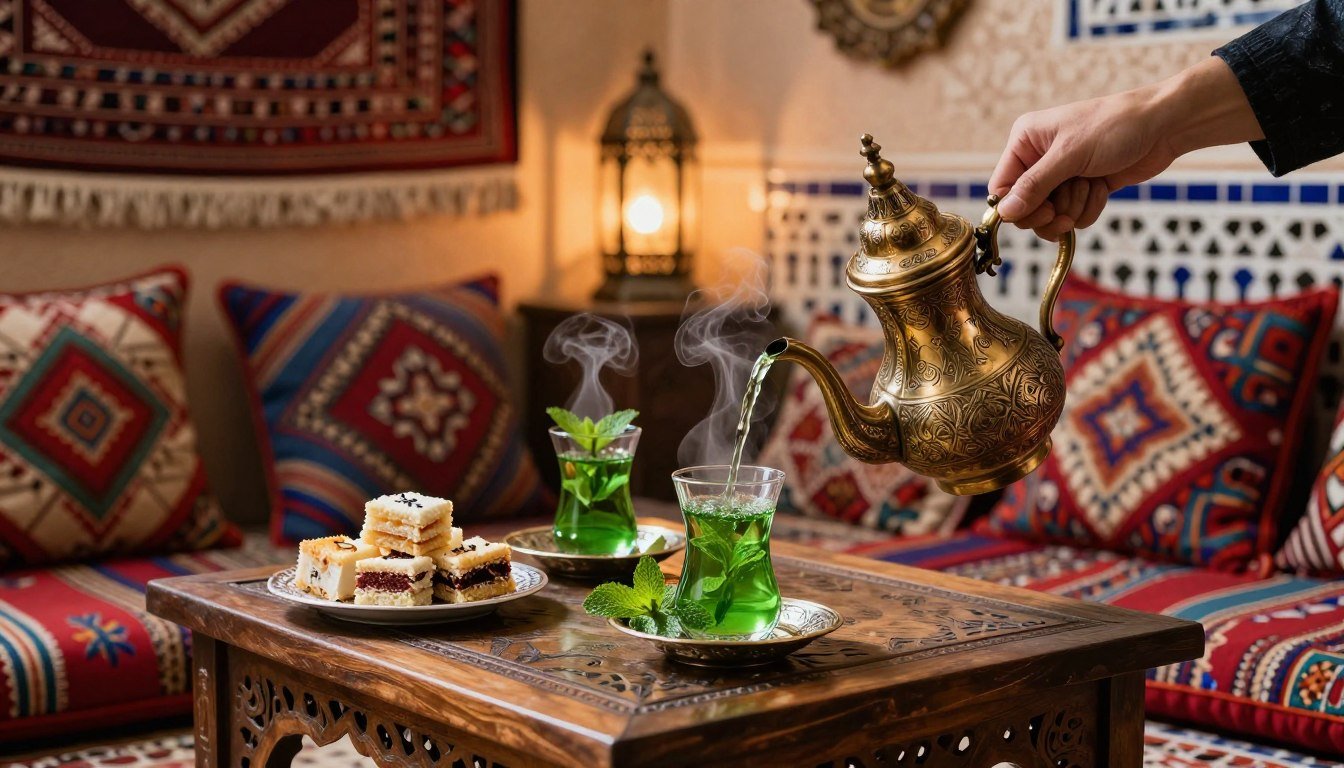
The Berrad is more than a teapot; it’s a sign of Moroccan hospitality. It’s often decorated with beautiful designs. Its long spout is used for the high pouring technique that’s part of Moroccan tea serving.
Serving Glasses and Trays
Serving glasses and trays are also important in the tea service. They are often decorated and make the tea service look even more beautiful.
The Brewing Technique
The brewing technique is where the magic of Moroccan mint tea comes to life. It involves several steps, each adding to the tea’s flavor and experience.
Washing the Tea Leaves
The first step is washing the tea leaves. This removes bitterness and prepares the tea for steeping.
Steeping Methods and Timing
Then, the tea is steeped for a certain time to get the best flavor. The steeping time can change based on personal taste and the tea type.
Adding Mint and Sugar
Fresh mint leaves and sugar are added to the tea. This gives it the unique flavor and sweetness that Moroccan mint tea is famous for. You can adjust the amount of mint and sugar to your liking.
The Three Cups Tradition
The Three Cups Tradition is a big part of Moroccan tea culture. It represents life’s journey, with the first cup bitter, the second strong, and the third sweet. This tradition is followed during the serving, adding a deeper meaning to drinking tea.

The Iconic Pouring Ritual
The pouring ritual of Moroccan mint tea is a beautiful display of elegance and hospitality. It’s not just about serving tea; it’s an art form. This tradition requires skill, patience, and attention to detail.
The High Pour Technique
The high pour technique is a key part of Moroccan tea serving. It involves pouring tea from high above the cups, creating a stunning cascade. This method is not only beautiful but also cools the tea and adds a layer of foam.
Achieving the Perfect Height
Getting the perfect height is key in the high pour technique. You aim to pour the tea smoothly into the cups without spilling. With practice, you’ll get better at pouring from high up, making it even more impressive.
The Skill Development Process
Mastering the high pour technique takes patience and practice. You start by practicing the pouring motion, then increase the height as you get more confident. Over time, you’ll pour tea with ease and precision.
Creating the Essential Foam (“The Crown”)
Creating the essential foam, known as “The Crown,” is a big part of the Moroccan tea pouring tradition. The foam is made by pouring the tea from high up, creating a layer on top. This makes the tea look and taste even better.
The Saying: “The First Cup is Bitter as Life…”
The saying “The First Cup is Bitter as Life, the Second Cup is Sweet as Love, and the Third Cup is Gentle as Death” shows the cultural importance of tea in Morocco. It symbolizes life’s journey, with its ups and downs. It highlights the role of tea in Moroccan culture and hospitality.
Moroccan Tea Etiquette and Social Customs
Moroccan hospitality shines through in the tradition of serving tea. This custom is steeped in etiquette and social norms. When you’re invited to share tea, you’re diving into a cultural tradition that’s more than just a drink.

Host Responsibilities
Serving tea in Morocco is a big deal for the host. It involves making sure the tea is made right and served with the right etiquette.
Proper Serving Order
The order in which tea is served is very important. The most honored guest gets served first. This shows respect and sets the mood for the gathering.
Refill Protocols
Refilling tea cups follows a set of rules. The host usually keeps refilling until the guest signals they’ve had enough. This can be done by leaving a bit of tea in the cup or by covering it with their hand.
Guest Expectations
Guests have certain customs to follow when receiving tea. Knowing these customs makes the experience more enjoyable and respectful.
Acceptance Gestures
When offered tea, guests should accept with thanks. It’s polite to receive the cup with both hands as a sign of respect.
Complimenting the Tea
It’s considered polite to compliment the host on the tea. Guests might say something about the flavor, the freshness of the mint, or how well the tea was made.
| Custom | Description |
|---|---|
| Serving Order | Serve the most honored guest first |
| Refill Protocol | Refill cups multiple times until the guest signals they’ve had enough |
| Acceptance Gesture | Accept tea with both hands as a sign of respect |
Proper Tea Acceptance and Drinking Manners
Drinking tea in Morocco has its own set of manners. Guests should take the tea with both hands, sip it, and then thank the host.
By following these customs, you can truly appreciate the cultural richness of Moroccan mint tea.
Mint Tea as Moroccan Hospitality Embodied
When you enter a Moroccan home, you feel the warmth of their hospitality. This comes in the form of a steaming cup of mint tea. It’s not just a drink; it’s a key part of their culture. It shows respect and kindness to guests.
The Symbolism of Offerinng Tea
Offering tea is a big part of Moroccan tradition. It’s more than just a drink. It’s a sign of welcome, respect, and friendship.
Welcoming Guests and Strangers
In Morocco, serving tea to guests is a special ritual. It doesn’t matter if you’re a family member or a stranger. Tea shows you’re welcome and valued.
Building Trust Through Tea Sharing
Sharing tea helps build trust and strong relationships. In Morocco, where family and friends are important, tea is a key step in forming bonds.
Tea in Celebrations and Special Occasions
Mint tea is a big part of Moroccan celebrations. It’s served at weddings, family gatherings, and even business meetings. Tea is a big part of these events.
Weddings and Family Gatherings
At weddings and family gatherings, tea is a symbol of joy. The way tea is prepared and served adds to the celebration.
Business Meetings and Negotiations
In business, serving tea shows respect and professionalism. It helps create a good atmosphere for talks and negotiations. It’s a way to build trust with clients and partners.
The Sensory Experience of Moroccan Mint Tea
Drinking Moroccan mint tea is a treat for the senses. The smell of fresh mint, the taste of green tea, and the sight of the tea being poured are all special. Together, they make a memorable experience.
| Sensory Aspect | Description |
|---|---|
| Aroma | Fresh mint leaves provide a refreshing and invigorating aroma. |
| Taste | The combination of green tea and mint creates a soothing and slightly sweet flavor. |
| Visual | The traditional pouring of tea from a height creates a mesmerizing display, adding to the overall experience. |
Experiencing Authentic Moroccan Tea Culture Today
Moroccan tea culture is a vibrant experience waiting for you in various settings across the country. You’ll discover the diverse ways tea is enjoyed and celebrated.
Tea Houses and Public Spaces
Morocco’s tea houses and public spaces offer a unique glimpse into the country’s tea culture. Here, locals gather to share tea and conversation.
Urban Tea Experiences
In cities like Marrakech and Fez, tea houses are bustling. You can enjoy traditional mint tea in a vibrant atmosphere.
Rural and Berber Tea Traditions
In rural areas, Berber communities maintain their own tea traditions. Visiting these regions lets you experience authentic Moroccan tea culture.
Bringing Moroccan Tea Traditions Home
You can bring Moroccan tea culture into your home. Adapt the traditional ritual to fit your kitchen. Use authentic ingredients and equipment to recreate the experience.
Adapting the Ritual for Your Kitchen
To adapt the Moroccan tea ritual, start with high-quality green tea and fresh mint. Use a traditional teapot to brew the tea. Don’t forget to add sugar to taste.
Modern Interpretations and Variations
While keeping the traditional core of Moroccan tea, you can try modern variations. Experiment with unique flavors or ingredients to create your own signature tea blend.
Tourism and Tea Culture in Morocco
Tourism plays a big role in promoting and preserving Moroccan tea culture. Visitors experiencing and appreciating this tradition help ensure it continues for future generations.
By engaging with local tea houses, participating in tea ceremonies, and showing appreciation for tea’s cultural significance, you help preserve this important part of Moroccan heritage.
Conclusion: The Enduring Legacy of Moroccan Mint Tea
As you end your exploration of Moroccan mint tea, it’s obvious that it has deeply influenced Morocco’s culture. Its rich history and detailed preparation make it a key part of Moroccan life. Mint tea is more than a drink; it’s a tradition that connects people.
Enjoying tea in Marrakech or making it at home, you’ll feel the cultural richness. The authentic Moroccan tea experience is filled with tradition and warmth. It shows the true spirit of Moroccan hospitality.
The legacy of Moroccan mint tea celebrates Morocco’s cultural heritage. It’s a symbol of community, hospitality, and warmth. Reflecting on it, you’ll see it’s not just a drink but a way to connect and share.
FAQ
What is the history behind Moroccan mint tea?
Moroccan mint tea started in the 18th century. Tea came to Morocco through the British. The Moroccans mixed Chinese Gunpowder tea with fresh mint for a unique taste.
What is the significance of mint tea in Moroccan culture?
Mint tea is key in Moroccan culture. It shows friendship, respect, and kindness. It brings families and friends together every day.
What are the essential ingredients of authentic Moroccan mint tea?
You need Chinese Gunpowder green tea, fresh Moroccan mint, and sugar. The quality of these ingredients makes the tea special.
How is Moroccan mint tea traditionally prepared?
It’s made with a Berrad (Moroccan teapot) and glasses. First, wash the tea leaves, then steep them. Add mint and sugar. The Three Cups Tradition is important in serving.
What is the significance of the high pouring ritual in Moroccan tea culture?
The high pouring ritual is a show of skill. It’s beautiful and holds deep cultural meaning. It represents life’s journey and is part of Moroccan hospitality.
What are the etiquette and social customs surrounding Moroccan tea?
Hosts must follow serving rules and refill correctly. Guests should accept the tea and compliment it. Drinking manners are also important.
How can I experience authentic Moroccan tea culture today?
Visit tea houses and public spaces. Explore rural and Berber tea traditions. Or, try the ritual at home.
What is the role of sugar in Moroccan mint tea?
Sugar balances the tea’s bitterness. It’s a key part of the traditional recipe.
Can I adapt Moroccan tea traditions to my own kitchen?
Yes, you can make the ritual your own. Try new ways and enjoy the cultural and sensory joy of Moroccan mint tea.