Couscous in Morocco: A Delicious Exploration of Moroccan Cuisine
As I walked through the lively markets of Marrakech, the smell of spices and fresh bread caught my attention. It led me to the heart of Moroccan cuisine. At the core of this culinary scene is couscous, a dish loved for centuries.
Exploring couscous showed me its deep cultural importance, most on Fridays. It’s not just a meal; it’s a symbol of Moroccan culture‘s rich heritage and warm welcome.
Key Takeaways
- Couscous is a staple in Moroccan cuisine, often served on Fridays.
- The dish holds significant cultural and traditional value.
- Moroccan cuisine is characterized by its rich flavors and aromas.
- Couscous represents the hospitality and heritage of Morocco.
- The preparation and variation of couscous are integral to Moroccan culinary traditions.
Couscous in Morocco: History and Cultural Significance
Couscous is more than a dish in Morocco; it’s a cultural symbol. It brings people together. As a staple in Moroccan cuisine, couscous has a rich history tied to the Berber ethnic group. It represents unity and tradition.
The National Dish and Its Origins
Couscous is Morocco‘s national dish, with a history deeply rooted in the country. It’s a key part of Moroccan cuisine, enjoyed on daily life and special occasions. Traditionally, it’s made from semolina flour, rolled into small pellets by hand.
The Berbers, Morocco’s indigenous people, created couscous. They steamed semolina flour pellets over a flavorful broth. This made the fluffy, tender couscous we know today.
Friday Couscous Tradition and Family Gatherings
In Morocco, couscous is served on Fridays, a day for family lunch. This tradition is about social bonding, with couscous at the center. Couscous preparation is a family affair, involving generations.
The Friday couscous tradition is key in Moroccan culture. It brings families together, strengthening bonds. It’s a time for sharing stories, enjoying food, and being with loved ones.
Key aspects of the Friday couscous tradition include:
- Family gatherings
- Communal preparation
- Social bonding
Understanding the Basics of Moroccan Couscous
In Morocco, couscous is more than just food; it’s a way to connect with others. It’s a key part of Moroccan cuisine, perfected over many years. To truly appreciate it, we must understand what makes Moroccan couscous special.
What Makes Moroccan Couscous Unique
Moroccan couscous is unique because of its traditional making and top-notch ingredients. Steaming it over a tasty broth gives it deep flavors. This method is a big part of Moroccan street food and cooking at home.
Different Types of Couscous Grains
Couscous grains come in different types, each with its own texture and taste.
Hand-Rolled vs. Commercial Couscous
Hand-rolled couscous is better because of its texture and how well it takes on flavors. Commercial couscous, though easy to find, doesn’t match up.
Whole Wheat and Barley Variations
Whole wheat and barley couscous are healthier options. Whole wheat has more fiber, and barley adds a nutty taste.
Essential Ingredients for Authentic Moroccan Couscous
To make real Moroccan couscous, you need the right ingredients. This includes the couscous grain, vegetables, spices, and meat. The quality of these ingredients affects the taste and feel of the dish.
The Perfect Couscous Grain Selection
The base of Moroccan couscous is the couscous grain. It’s made from semolina flour, which is coarser and yellower than regular flour. For the best taste and texture, choose high-quality, coarse semolina couscous.
Traditional Vegetables and Aromatic Spices
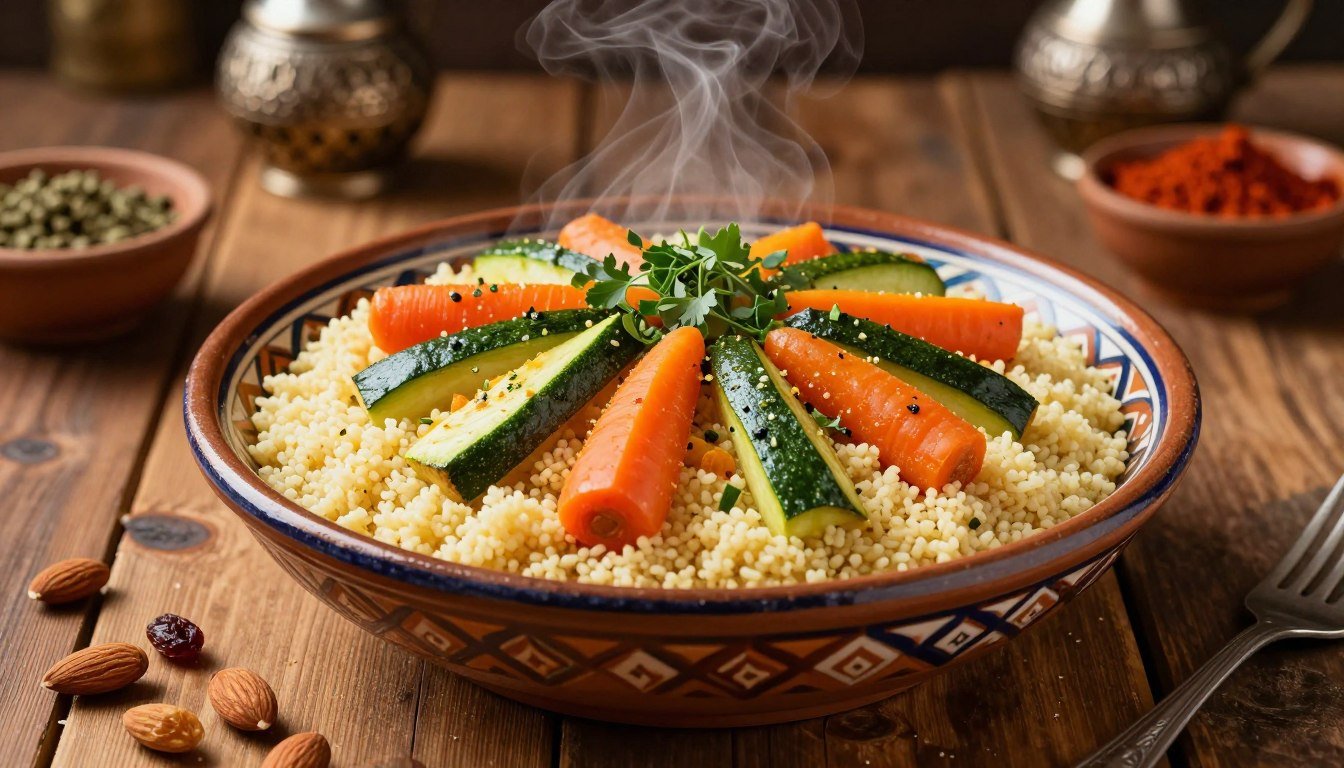
Moroccan couscous often includes various vegetables and spices. Common veggies are carrots, zucchini, and onions. Spices like cumin, coriander, and turmeric give it a warm, aromatic flavor.
Meat Options: Lamb, Chicken, and Beef
When it comes to meat, lamb, chicken, and beef are traditional choices. Each meat adds its own flavor to the couscous. For instance, lamb has a rich, gamey taste, while chicken is leaner. The meat is cooked slowly with veggies and spices to make a flavorful broth.
Some common ingredients in Moroccan couscous recipes are:
- Couscous grains
- Vegetables (carrots, zucchini, onions)
- Aromatic spices (cumin, coriander, turmeric)
- Meat (lamb, chicken, beef)
Traditional Equipment for Preparing Couscous
Couscous is a key part of Moroccan cuisine. It’s made with a special steamer called a couscoussier. This tool is vital for getting the right texture and taste.
The Couscoussier: Morocco’s Special Steamer
A couscoussier has two parts. The bottom holds the broth, and the top is for the couscous. This way, the couscous soaks up the broth’s flavors without getting soggy. It’s a must-have in Moroccan kitchens.
Alternative Equipment for Home Cooks in the UK
You don’t need a couscoussier to make couscous. In the UK, you can use a metal steamer or a bamboo steamer over boiling water. Some cookware even has couscous attachments. The goal is to steam the couscous gently and evenly.
- Metal steamer
- Bamboo steamer
- Couscous-specific cookware attachments
Step-by-Step Guide to Preparing Authentic Moroccan Couscous
Making authentic Moroccan couscous is an art that needs patience and detail. It involves several steps, from preparing the grains to steaming them right.
Preparing and Hydrating the Couscous Grains
The first step is to prepare and hydrate the couscous grains. This is called initial moistening.
Initial Moistening Technique
Start by sprinkling a bit of water over the grains and mix gently. This rehydrates the grains for steaming.
Hand-Rolling for Perfect Texture
Then, roll the grains into small pellets with your hands. This is key for the right texture.
Creating the Flavorful Vegetable and Meat Broth
A rich broth is key for Moroccan couscous. Mix vegetables like carrots, zucchini, and onions with meat (lamb, chicken, or beef) in a big pot.
The Three-Stage Steaming Process
The steaming makes couscous light and fluffy. It involves three stages: steaming, mixing and fluffing, and steaming again.
Final Fluffing, Butter Addition, and Serving
After the last steam, fluff the couscous with a fork. Then, melt butter into it for richness. Serve it with the flavorful broth and meat.
By following these steps, you can make a delicious Moroccan couscous. The secret is in the details and patience.
Regional Variations of Couscous Across Morocco
Couscous is a big deal in Moroccan food, and it changes a lot from one place to another. As I explored Morocco, I saw how each area puts its own spin on couscous. It’s a really interesting food trip.

Northern Moroccan Couscous Styles
In Northern Morocco, couscous gets a mix of Mediterranean and Berber spices. Fez is famous for its couscous, which comes with veggies and meats. Saffron and other spices make it taste special.
Southern Berber Couscous Traditions
The South of Morocco, home to Berber people, has its own couscous ways. They use local stuff like dates and certain meats. It shows off the area’s culture.
Coastal Seafood Couscous Variations
By the sea, couscous gets a lot of seafood. It’s got fish and shellfish in a tasty broth with spices and herbs. It’s a great example of Morocco’s food variety.
Some things that stay the same across these variations are:
- Aromatic spices like cumin and coriander
- Fresh veggies and herbs
- Meat or seafood, depending on the area
- Traditional cooking ways, like steaming
These changes show how versatile couscous is. They also show the amazing food diversity in Morocco. It’s a key part of Moroccan street food and cuisine.
Nutritional Benefits of Moroccan Couscous
Moroccan couscous is a key dish in a healthy diet. It’s full of carbs, fiber, and minerals. Its health benefits come from its ingredients and how it’s made.
Couscous as Part of a Balanced Diet
Adding couscous to your meals is good for you. It’s made from semolina flour, which has complex carbs. With veggies and lean proteins, it becomes a meal full of nutrients.
- High in fiber, which aids digestion
- Rich in selenium, an antioxidant that helps protect cells
- Good source of plant-based protein when combined with vegetables and legumes
Traditional vs. Modern Preparation Health Considerations
Traditional couscous is steamed, keeping nutrients in. Modern recipes might add ingredients that change its healthiness. Adding veggies and lean meats boosts nutrients, but too much salt and oil can harm health.
A nutrition expert says, “How couscous is made and what’s with it matters a lot.” Sticking to traditional steaming and adding healthy touches makes couscous a great choice.
Common Mistakes to Avoid When Making Moroccan Couscous
Making Moroccan couscous can be a fun experience. But, it’s easy to make mistakes. Knowing these can help your couscous be light and fluffy.
Grain Preparation Pitfalls
Preparing the grains is key in making Moroccan couscous. Two common mistakes can change the texture and taste.
Insufficient Hydration Problems
Not enough water can make couscous dry and crumbly. Make sure to hydrate the grains well. This lets them soak up the right amount of moisture.
Overworking the Grains
Working the grains too much can make them sticky and clumpy. Fluff the couscous gently with a fork after steaming. This helps avoid this problem.
Seasoning and Cooking Errors
Seasoning and cooking are also important. Mistakes here can make the dish taste bad or be overcooked.
To avoid these, season the broth and couscous right. Also, watch the cooking time closely. Using a couscoussier or steamer can help get the perfect texture.

Serving and Eating Couscous the Moroccan Way
Serving couscous in Morocco is a special event. It brings families and friends together. Everyone feels welcome and enjoys the moment.
Traditional Serving Customs and Etiquette
In Morocco, serving couscous is a big deal. It’s placed on a large, fancy platter. The couscous is topped with veggies and meats.
It’s common to eat couscous with your hands. You use your right hand to make small balls. Then, you eat them.
Accompaniments and Side Dishes
Couscous is served with many tasty sides. These add to its flavor. Here are some favorites:
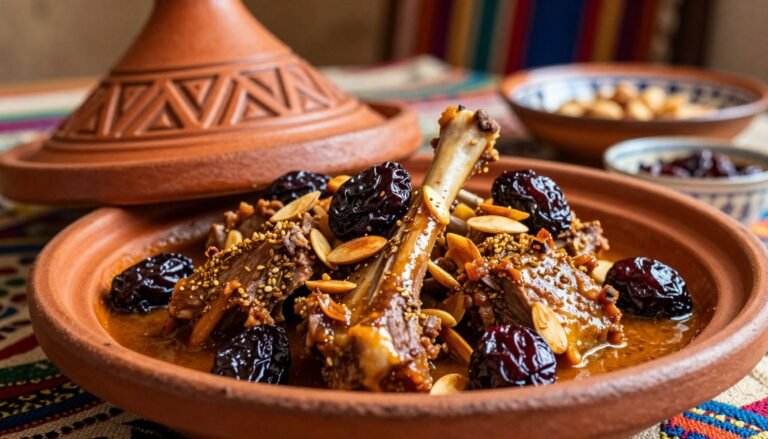
- Sweet and Savory Combinations: Dried fruits and nuts balance the savory couscous with sweetness.
- Harissa and Other Essential Condiments: Harissa, a spicy paste, is a must-have. It adds heat to your meal.
Eating couscous the Moroccan way is more than food. It’s about the tradition, the sides, and the warmth. This mix makes for a memorable dining experience.
Conclusion: Embracing the Heart of Moroccan Cuisine
Couscous is more than a dish in Morocco; it’s a symbol of the country’s culture. It shows the warmth and hospitality of Moroccan cuisine. This is through its traditional ways of making and sharing meals.
Learning about couscous’s history and cultural importance helps us see the heart of Moroccan cuisine. Whether you’re a pro chef or just starting, adding couscous to your cooking is a great way to dive into Moroccan traditions.
Exploring Moroccan cuisine means more than just the food. It’s about the joy of sharing meals with others. So, enjoy the flavors, smells, and company of a well-made couscous dish. This way, you’ll truly experience the heart of Moroccan cuisine.
FAQ
What is couscous, and why is it significant in Moroccan cuisine?
Couscous is a dish from North Africa made from durum wheat semolina. It’s a big deal in Morocco because it’s eaten on Fridays and special days. It brings families and communities together.
What makes Moroccan couscous unique compared to other types of couscous?
Moroccan couscous stands out because of how it’s made. It’s hand-rolled and steamed, and it has special spices and veggies. The grain size also makes it different.
What are the essential ingredients for making authentic Moroccan couscous?
You need couscous grains, veggies like carrots and zucchini, and spices like cumin and coriander. Meat like lamb, chicken, or beef is also key. The quality of the grain and the freshness of the ingredients matter a lot.
What is a couscoussier, and why is it important for preparing couscous?
A couscoussier is a steamer used in Morocco to cook couscous. It’s important because it cooks the couscous and broth together. This makes the couscous taste better. While other tools can work, a couscoussier is best for real flavor.
How do I prepare and hydrate couscous grains for cooking?
First, rinse the couscous grains with water. Then, soak them in water or broth. The amount of liquid and soaking time depend on the couscous type and your taste.
What are some common mistakes to avoid when making Moroccan couscous?
Don’t soak the couscous too little or too much. Don’t overwork it, and season it right. Also, cook it until it’s just right, and use the right grain for the texture you want.
How is couscous traditionally served in Morocco, and what are some common accompaniments?
In Morocco, couscous is served on Fridays and special days. It comes with veggies, meats, and sauces. Harissa, preserved lemons, and pickled veggies are common sides.
Are there regional variations of couscous across Morocco, and what are some examples?
Yes, there are different couscous styles in Morocco. Northern styles often have seafood and Mediterranean flavors. Southern Berber couscous might include dates and olives. Coastal areas have couscous with fresh seafood.
What are the nutritional benefits of Moroccan couscous, and how can it be part of a balanced diet?
Moroccan couscous is full of carbs, fiber, and minerals. It’s nutritious when made with veggies, lean meats, and a bit of spice and oil. It can be a healthy meal choice.