Moroccan Hammam Experience
Moroccan Hammam Experience: What to Expect (Tourists Guide)
Planning a trip to Morocco? You’ve probably heard about the Hammam experience. But what is it, and what can you exepect?
Moroccan Hammam
Curious about your Hammam visit? Will you get scrubbed and massaged? What are the traditional rituals? This guide will cover everything you need to know, so you’re ready for this amazing experience.
Key Takeaways
- Understand the cultural significance of a Hammam in Moroccan culture
- Learn what to expect during a typical Hammam visit
- Discover the traditional rituals and treatments involved
- Get tips on how to prepare for your Hammam experience
- Find out how to make the most of your visit and relax like a local
The Cultural Significance of the Moroccan Hammam
When you enter a traditional Moroccan Hammam, you’re not just going to a bathhouse. You’re diving into a key part of Moroccan culture. The Hammam is where tradition and community come together.
Historical Background of Hammams in Morocco
Hammams in Morocco have a long history, starting with the Roman Empire’s influence. Over time, they became a big part of Moroccan architecture and culture. According to Morocco World News, Hammams today are a mix of old traditions and local customs.
Social Role of Hammams in Moroccan Society
In Moroccan society, Hammams are more than just places to clean up. They are where people come together to socialize and purify themselves. They are also where special occasions are celebrated, strengthening community bonds.
The Hammam in Morocco shows the country’s rich cultural heritage. It offers a unique experience that blends tradition, social interaction, and personal renewal.
Understanding the Traditional Moroccan Hammam
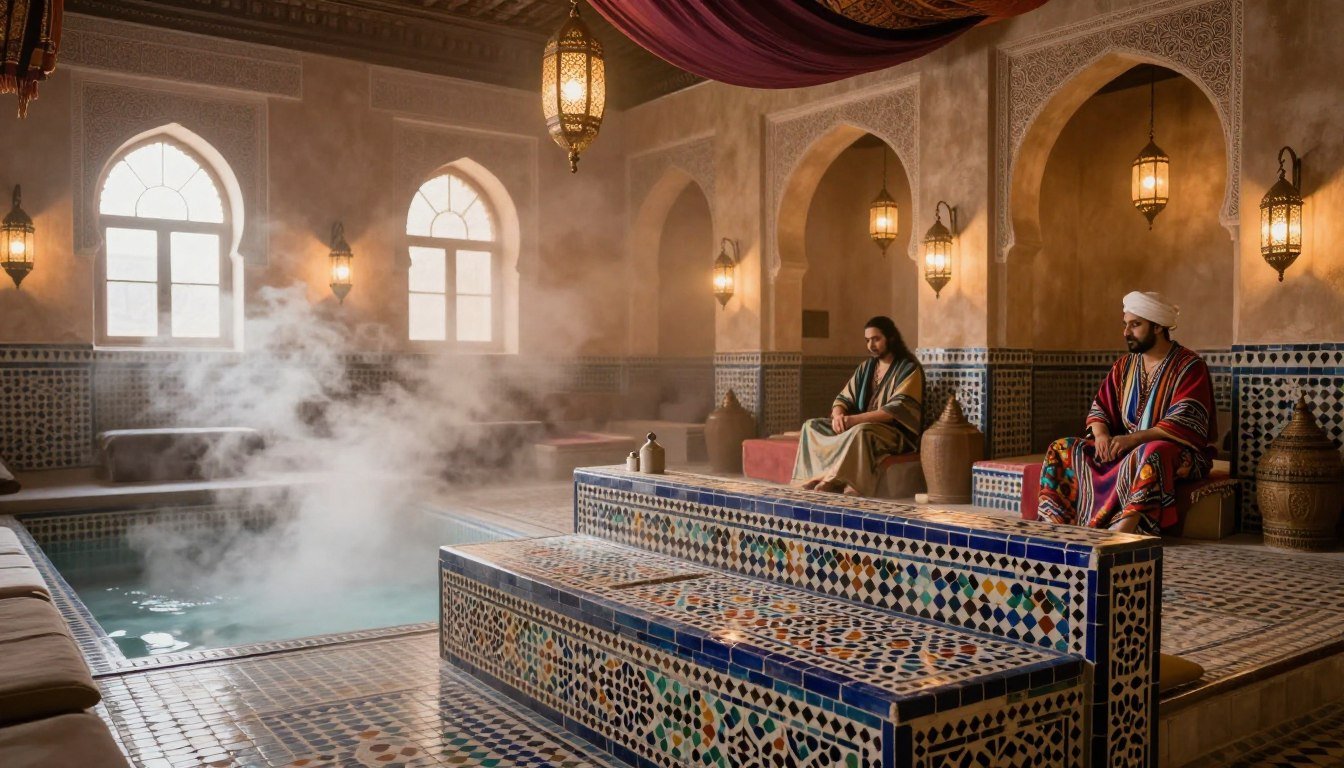
When you enter a traditional Moroccan Hammam, you’re about to dive into a centuries-old tradition. It’s a mix of cleansing, relaxation, and socializing. The Hammam is a key part of Moroccan culture, where people come together to clean, unwind, and chat.
The Bathing Ritual Explained
The Hammam ritual is a series of steps to purify and soften your skin. It starts with a warm, steamy room to sweat out toxins. Then, a kessa glove scrubbing removes dead skin cells, leaving your skin smooth.
After scrubbing, you rinse and relax, sometimes with a gentle massage or other treatments.
“The Hammam is not just a place for physical cleansing; it’s a ritual that rejuvenates both body and soul.”
Key Differences from Turkish Baths and Western Spas
Hammams, Turkish baths, and Western spas share some similarities but have key differences. Moroccan Hammams focus more on exfoliation and cleansing than Turkish baths do on heat and steam. Unlike Western spas, Hammams are more about community and tradition than luxury.
Types of Hammams You Can Visit in Morocco
Morocco’s hammam culture is rich and varied. You can find everything from traditional to luxurious hammams. It’s important to know the different types to choose the best one for you.
Traditional Public Hammams
Traditional public hammams are a big part of Moroccan culture. They are usually for men and women separately. You’ll find a communal area where locals and visitors bathe and socialize.
The atmosphere is lively. You’ll hear the sound of running water and people chatting.
Luxury Spa Hammams
Luxury spa hammams offer a more comfortable and luxurious experience. They are designed for tourists and have private rooms and relaxing areas. You can also enjoy massages and scrubs here.
These hammams provide a calm environment while keeping the traditional rituals alive.
Riad and Hotel Hammams
Many riads and high-end hotels in Morocco have their own hammams. These offer a private and exclusive experience. You’ll get personalized service and luxurious amenities.
They are perfect for those who want privacy and comfort.
| Type of Hammam | Experience | Amenities |
| Traditional Public | Basic, communal | None |
| Luxury Spa | Luxurious, relaxing | Private rooms, massages |
| Riad/Hotel | Private, exclusive | Personalized service, luxurious |
Edit
Delete
Essential Items to Bring to a Moroccan Hammam
Getting ready for a Moroccan Hammam means packing the right things. This ensures you have a good time and follow the Hammam etiquette in Morocco. Knowing what to bring will help you enjoy your visit fully.
Required Personal Items
You’ll need some key items for the Hammam experience. These are:
Clothing and Towels
Bring a swim cap or towel to cover your hair. Also, have a few towels for drying off. A lightweight robe or clothes for after the Hammam are good ideas.
Toiletries
Don’t forget a toothbrush and toothpaste, deodorant, and other hygiene items. Some Hammams might have these, but it’s safer to bring your own.
Optional Items for Enhanced Experience
For a better experience, think about bringing black soap or Rhassoul clay. These are used in traditional Moroccan Hammam treatments. You might also want a hair tie, flip-flops, and a water bottle to stay hydrated.
Preparing for Your First Moroccan Hammam Experience
Before you go to a Moroccan Hammam, it’s key to get ready for the unique cultural and physical journey. Knowing what to expect can make your visit better. It lets you dive fully into the traditional Moroccan bathing ritual.
Mental Preparation for Cultural Differences
Getting ready for cultural differences is vital. The Hammam is a big part of Moroccan culture, with its own rules and manners. Being open and respectful of these customs will make your time more fun. For example, knowing nudity is okay in Hammams can help you relax.
Learning a few basic Arabic phrases, like “Shukraan” (thank you), shows respect for the local culture.
Physical Preparation Tips
Getting ready physically means knowing your health and limits. The warm, steamy setting can be tough, so you should be in good health. Drinking water before and after is also smart.
| Preparation Tip | Benefit |
| Hydrate before and after | Reduces risk of dehydration |
| Be aware of your health | Ensures a safe experience |
Timing Your Visit
Choosing the right time for your visit can make it better. Women often go in the morning, while men go in the evening. Check with your Hammam or Riad for their hours to plan well.
By getting mentally and physically ready, and picking the right time, you’ll have a great Moroccan Hammam experience.
Step-by-Step Guide to the Moroccan Hammam Process
When you visit a Moroccan Hammam, you’ll go through a traditional cleansing ritual. This ritual includes several key steps. It’s meant to purify both your body and mind, making you ready for a rejuvenating experience.
Arrival and Changing Room Etiquette
When you arrive, a Hammam attendant will welcome you and guide you through the first steps. You’ll go to a changing room to undress and wrap yourself in a towel. Remember to remove your shoes before entering the Hammam area. Modesty is key as you change.

Moroccan Hammam Process
The Warming Up Phase
The Hammam experience starts with a warming up phase. You’ll relax in a warm, steamy room. This opens your pores and prepares your skin for the treatments ahead. You might be offered a warm drink or simply relax in the steam.
The Scrubbing Process with Kessa Glove
The next step is a thorough scrubbing with a Kessa glove. This exfoliating mitt removes dead skin cells, leaving your skin smooth and refreshed. A Hammam attendant will scrub vigorously to ensure a deep cleanse.
Rinsing and Relaxation
After scrubbing, you’ll be rinsed with warm water to remove soap and dead skin cells. Then, you’ll relax and enjoy the Hammam’s peaceful atmosphere.
| Step | Description | Key Elements |
| Arrival | Greeting and changing | Towel, modesty |
| Warming Up | Relaxation in steam | Steam, warmth |
| Scrubbing | Exfoliation with Kessa glove | Kessa glove, scrubbing |
| Rinsing and Relaxation | Washing and unwinding | Warm water, relaxation |
Traditional Products Used in Moroccan Hammam Treatments
When you visit a Moroccan Hammam, you’ll find a variety of traditional products. These items have been used for centuries. They are known for their nourishing and cleansing properties.
Moroccan Black Soap (Savon Noir)
The Moroccan Black Soap, also known as Savon Noir, is a key part of Hammam treatments. This rich, dark soap is made from olive oil. It’s great for softening and cleansing the skin.
It’s applied to the body to remove dead skin cells. This leaves your skin feeling smooth and refreshed.
Rhassoul Clay
Rhassoul Clay is another important product in Moroccan Hammams. This natural clay is full of silica and magnesium. It’s perfect for absorbing impurities and nourishing the skin.
It’s used as a mask to detoxify and soften your skin. This promotes a healthy glow.
Argan Oil and Other Post-Hammam Treatments
After your Hammam treatment, you’ll get Argan Oil and other nourishing products. Argan Oil is famous for its moisturizing properties. It helps hydrate and protect your skin.
It’s often used in massage to relax your muscles. This leaves your skin feeling soft and supple.
Hammam Etiquette: Do’s and Don’ts for Tourists
Knowing the rules of hammam etiquette is key for a good time in Morocco. Before you go to a Hammam, learn about the local customs and rules. These help you behave right in these traditional bathhouses.
Respecting Gender Separation
Moroccan Hammams have separate areas for men and women. It’s important to stick to your gender’s time. This makes everyone comfortable and avoids any cultural mistakes.
Appropriate Behavior in Communal Spaces
In shared areas, being modest is important. Wear the right clothes and be careful with your body language. Avoid loud talking and taking pictures without asking. Respect others’ space and comfort.
Tipping Guidelines
Tipping is a big part of Hammam culture. Give your attendant 10-20 dirhams for their help. You might also tip other staff who help you. Tipping shows you appreciate their service.
By following these tips, you’ll have a great and respectful Hammam experience. You’ll get to enjoy the culture and relax fully.
Local Hammam vs. Tourist-Oriented Hammam: Making Your Choice
When planning your Moroccan Hammam experience, you’ll need to decide between a local Hammam and a tourist-oriented one. This choice affects your experience, from authenticity to comfort and amenities.
Authentic Experience vs. Comfort
Local Hammams give you a true taste of Moroccan culture. But, they might not have the comforts you’re used to. Tourist Hammams, on the other hand, offer luxury but might miss the authentic feel of a local place.

local hammam vs spa hammam
Price Differences and What They Include
Price is a big factor in choosing between local and tourist Hammams. Local ones cost around $10-$20 per person. Tourist Hammams, found in luxury riads or spas, can cost $50 to over $200 per person, depending on what’s included.
| Aspect | Local Hammam | Tourist-Oriented Hammam |
| Authenticity | High | Variable |
| Comfort Level | Basic | Luxurious |
| Price Range | $10-$20 | $50-$200+ |
Language Barriers and How to Navigate Them
Language can be a challenge, mainly in local Hammams where staff might not speak English. Tourist Hammams usually have staff who speak many languages. To overcome language barriers, learn basic Arabic phrases, carry a translation guide, or visit with a local guide.
Health Benefits of the Moroccan Hammam Experience
The Moroccan Hammam is more than a bath. It’s a way to refresh your body and mind. You’ll find many benefits that improve your health.
Physical Benefits for Skin and Body
The Hammam is great for your skin and body. It uses steam, exfoliation, and special treatments to:
- Deep cleanse and purify your skin
- Remove dead skin cells, revealing smoother skin
- Improve circulation and reduce muscle tension
- Nourish and moisturize your skin with natural products like argan oil and rhassoul clay
Mental and Emotional Benefits
The Hammam also boosts your mental and emotional health. The calm setting and treatments help to:
- Reduce stress and anxiety
- Promote deep relaxation and calmness
- Enhance your overall sense of well-being
- Provide a moment of solitude and self-care in a busy world
Adding the Moroccan Hammam to your travels can rejuvenate you. It’s good for both your body and mind.
Post-Hammam Care and What to Expect After Your Experience
After your Moroccan Hammam, taking the right steps is key. Proper aftercare keeps your skin clean and healthy. It also helps keep the relaxation and rejuvenation from the hammam ritual.
Immediate Aftercare for Your Skin
Pat your skin dry with a towel after your hammam. Then, apply a lot of argan oil. This keeps your skin soft and hydrated.
Hydration and Rest Recommendations
Drink lots of water after your hammam to rehydrate. Resting afterwards helps your body recover from the intense scrubbing and steaming. This downtime lets you fully enjoy the hammam’s relaxing effects.
| Aftercare Tip | Benefits |
| Apply Argan Oil | Moisturizes and nourishes the skin |
| Stay Hydrated | Replenishes lost fluids and supports skin health |
| Rest and Relax | Enhances the overall relaxation experience |
Extending the Benefits at Home
To keep enjoying your Moroccan Hammam, add hammam-inspired habits to your daily routine. Use a Kessa glove in your showers for skin exfoliation. Regular argan oil application keeps your skin hydrated and soft.
Conclusion: Embracing the Moroccan Hammam as Part of Your Travel Experience
When planning your trip to Morocco, don’t miss out on visiting a traditional Moroccan Hammam. It’s not just a spa day. It’s a deep dive into Morocco’s culture and history. Knowing what to expect will help you fully enjoy this ancient ritual.
From start to finish, the Moroccan Hammam for tourists cleanses both body and spirit. It’s a mix of physical rejuvenation and cultural immersion. This makes it a memorable part of your travel journey.
Looking forward to your Moroccan Hammam experience? Remember to respect local customs and traditions. This way, you’ll have a more authentic experience and help preserve this cherished Moroccan tradition. So, as you explore Morocco’s vibrant souks, majestic architecture, and rich heritage, make sure to visit a Hammam.
FAQ
What is a Moroccan Hammam?
A Moroccan Hammam is a traditional bathhouse. It offers a unique bathing ritual. This includes scrubbing, steaming, and relaxation. Traditional products like black soap and Rhassoul clay are used.
What should I wear to a Moroccan Hammam?
Wear a bathing suit or a towel to cover yourself. Remove your jewelry and other accessories. Some Hammams provide a traditional Hammam robe.
What are the benefits of a Moroccan Hammam experience?
The Hammam offers physical rejuvenation through exfoliation and cleansing. It also provides mental relaxation and stress relief. It can improve skin health and reduce muscle tension.
How do I prepare for a Moroccan Hammam?
Be mentally prepared for cultural differences. Arrive well-hydrated. Avoid eating a heavy meal before your visit. Follow Hammam etiquette rules.
What is the difference between a local Hammam and a tourist-oriented Hammam?
A local Hammam offers a more authentic experience. A tourist-oriented Hammam provides more comfort and amenities. Local Hammams may have language barriers, but tourist-oriented Hammams often have staff who speak multiple languages.
Can I visit a Moroccan Hammam if I’m not familiar with the culture?
Yes, you can visit a Moroccan Hammam even if you’re not familiar with the culture. It’s a great way to experience Moroccan traditions. Many Hammams are welcoming to tourists.
How long does a typical Moroccan Hammam experience last?
A typical Hammam experience lasts around 1-2 hours. This depends on the type of Hammam and the services you choose.
What is the Kessa glove used for in a Moroccan Hammam?
The Kessa glove is a coarse, exfoliating mitt. It’s used to remove dead skin cells and cleanse the skin during the Hammam scrubbing process.
Are Moroccan Hammams segregated by gender?
Yes, many traditional Hammams are segregated by gender. But, some modern or luxury Hammams may offer mixed-gender sessions or private rooms.
How much should I tip at a Moroccan Hammam?
Tipping practices vary. It’s customary to tip your Hammam attendant around 10-20 dirhams (approximately $1-2 USD) for their services.
Can I book a private Hammam session?
Yes, many luxury Hammams and some riads and hotels offer private Hammam sessions. These can be booked in advance.
What are the health benefits of using Rhassoul clay in a Moroccan Hammam?
Rhassoul clay is rich in minerals. It’s used to cleanse and nourish the skin. This improves skin health and reduces inflammation.
How can I extend the benefits of my Moroccan Hammam experience at home?
To extend the benefits, use traditional Moroccan products like argan oil and black soap. Stay hydrated. Practice relaxation techniques like meditation or deep breathing.